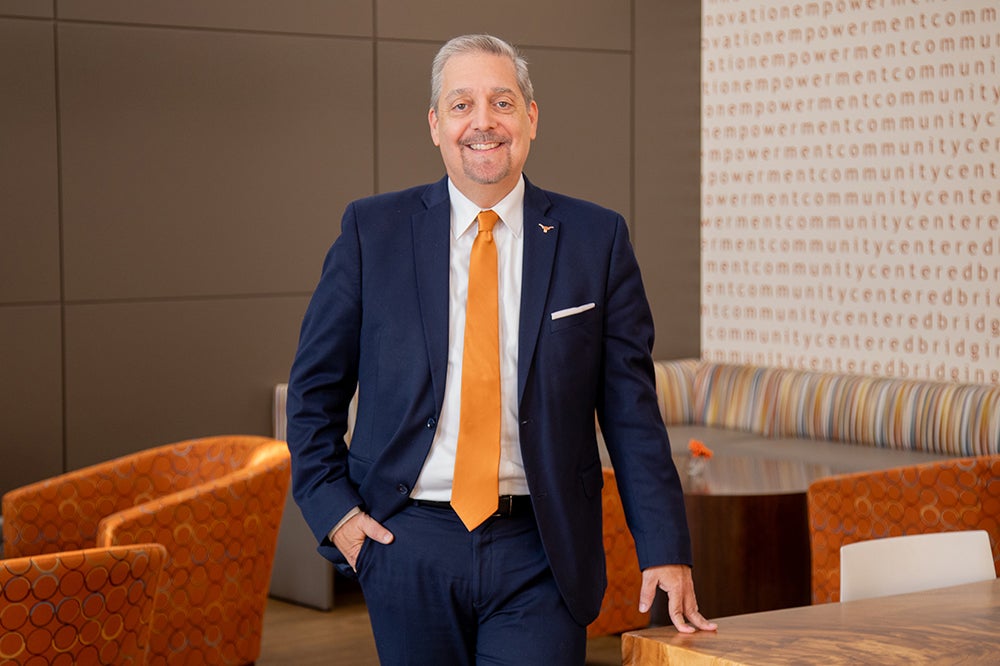
A tenure marked by progress, partnership and purpose concludes as Dean Charles R. Martinez Jr. steps down as dean of the College of Education.
Dean Charles R. Martinez Jr. has long believed in the power of inflection points in his life—those pivotal moments that don’t just mark change but quietly redirect its course.
Before he began his tenure as Dean of the College of Education in 2019, he had built a life and a legacy at the University of Oregon, a place where his son was born and his professional roots run deep. For more than two decades, he led institution-wide efforts to broaden participation and opportunity initiatives, founded the Center for Equity Promotion in his role as a professor, and served as chair of the Oregon State Board of Education. He turned down academic leadership opportunities in other states, reluctant to leave what felt like a dream job of advancing policies and programs focused on expanding access, strengthening inclusion and fostering student success and research impact across the state.
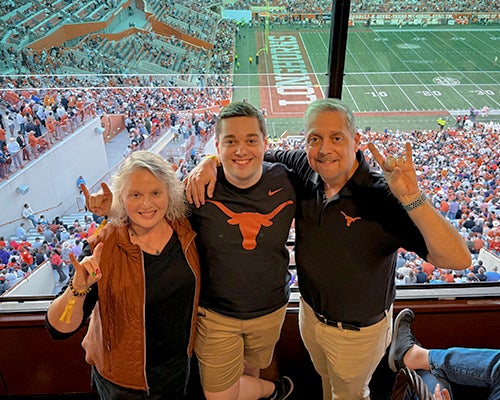
Even the most steadfast loyalties can be tested over time. For Martinez, it was the pull of The University of Texas at Austin that finally drew him from the only academic home he had ever known. What he saw at UT was more than a campus; it was a crossroads where scholars, educators, students and staff from around the world arrived at defining moments in their lives, ready to stretch, lead and change the world.
He accepted the role of Dean of the College of Education not simply because of what the college had achieved, but because of what it was poised to become. Its foundation—carefully and thoughtfully built by his predecessor—was strong and unmistakable. But he recognized an opportunity to sharpen its focus, unify its leadership, and unlock its full potential.
The connection between Martinez and the institution was immediate and undeniable. It affirmed what he instinctively knew—these were the right people, the right place and the right moment to reimagine education and expand its impact far beyond campus.
Roots in Resilience
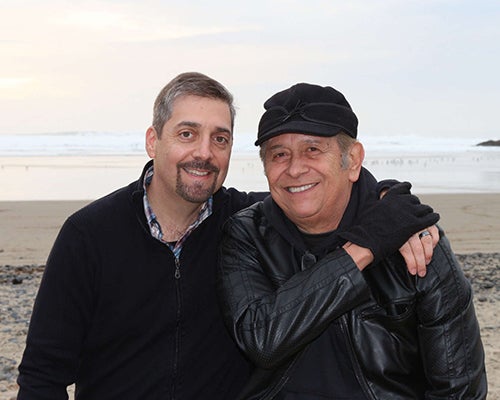
The first inflection point in Martinez’s life occurred during his childhood. Born and raised in San Diego, he is a third-generation Mexican American who is shaped profoundly by his family’s roots and resilience. He was raised primarily by his single father, Charles Sr., for whom the most important thing in life was being a dad.
After his parents’ divorce, his early years were marked by constant moves and instability, while his father worked tirelessly to support the family. Life changed after his father befriended a man—a teacher from Minnesota—who became a roommate, lifelong friend and surrogate second dad to his three children and was known affectionately as Nino. With their father working late nights, Nino guided the children through reading, writing and math lessons and cared for them with patience and structure.
Together, my father and Nino provided the stability we needed,
Martinez said. After this period, my academic potential was noticed by teachers, opening doors of opportunity and ultimately leading me to college. That experience showed me just how powerful mentors and teachers can be because I was fortunate enough to have one in my own life.
He attended Pitzer College, where he graduated with honors with a degree in psychology. During that time, he worked 40 hours a week while supported by scholarships, work-study, interest-free loans and Pell Grants. He later earned both his master’s degree and Ph.D. from the California School of Professional Psychology.
My father instilled a naïve but powerful belief that if I worked hard enough, I could do anything,
Martinez said. For a young, first-generation student unsure of himself, that belief was a superpower that shaped my path.
Educating the Next Generation of Thinkers
Founded in the late 1800s, the UT College of Education has become a global leader in education, steadfast in its commitment to expanding access throughout Texas. From the moment Martinez arrived on campus, he embraced a bold, transformative vision centered on cultivating a community united by shared purpose to make a lasting difference for children, families, schools and communities.
He brought people of the college together, reshaping the culture, energy, dialogue and sense of belonging. He met with each faculty member in order to become a better spokesperson and champion for their work. As a result, people from every department began to see themselves as part of something larger, a truly connected college community.
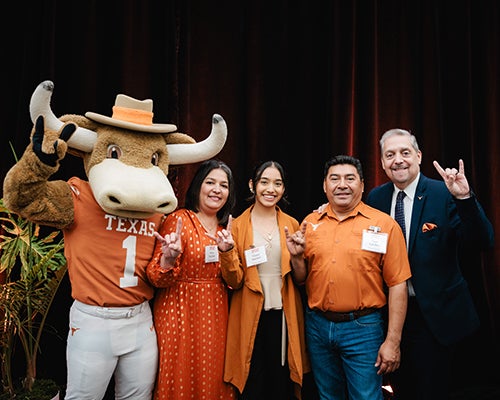
Under his leadership, the college launched Reimagine Education, a bold and visionary plan to transform education and health in Texas and beyond. Every unit, department, faculty member, staff member and student in the college community had the opportunity to weigh in to help establish core values, which shaped three key priorities: creating greater fairness and reducing gaps; recognizing and supporting the unique needs of different communities by responding to place and context; and helping people thrive through life’s transitions—both the expected and unexpected.
Dean Martinez held vision-building sessions that were incredibly important,
said Beth Maloch, senior associate dean in the College of Education. He genuinely wants to hear what others are thinking, so he opened the doors to weigh in, debate and bring forward their own ideas. When he rolled out Reimagine Education, it truly reflected a shared vision. He has continued that open-door approach, giving us opportunities each year to meet with him and ask questions.
Martinez describes Reimagine Education not as a traditional strategic plan full of check boxes, but as an effort to set a clear destination for the college’s potential, alongside a rigorous annual goal-setting process to review the past year’s successes based on detailed metrics. This would lead to new goals for the upcoming year based on the unique capabilities of the college and needs from the field and the state. After months of meeting with departments and hearing from faculty, staff and students, we defined the college’s vision and signature impact areas,
he said. That felt like progress, but the real work had just begun. Together, we were ready to turn vision into impact.
College of Education: Unlocking Potential, Together
Martinez takes immense pride in the college’s extraordinary accomplishments achieved collectively in pursuit of excellence in education, research and public service. He is quick to point out that the college’s success is due to the deep and sustained commitment of its faculty, staff and longtime champions.
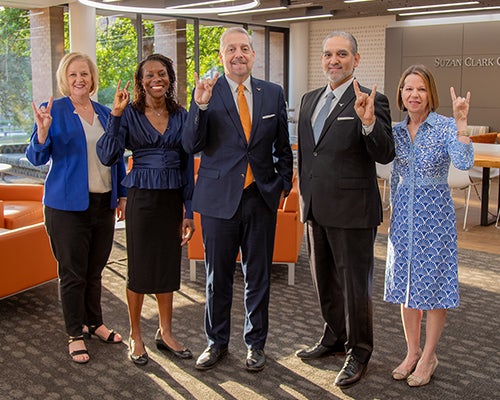
At the heart of every initiative are the students the college serves and its commitment to recruiting, enrolling, supporting and preparing the next generation of researchers and scholars. By leaning in and dedicating themselves fully to the endeavor, members of the faculty and staff helped drive improvements that led to significant achievements, including a 10-point rise in U.S. News & World Report’s graduate school rankings over the past three years. This year the college is ranked No. 4 among public colleges of education and No. 6 overall, making it among the highest-ranked graduate schools at UT.
Over the last six years, undergraduate enrollment has grown by more than 40%, representing the largest percentage increase of any college or school during that period. In addition, the college’s 82% four-year graduation rate establishes a new benchmark for student success and ranks among the very top at UT.
The college’s success at improving four-year graduation rates is a source of pride for Martinez, being a first-generation college graduate himself. One innovative approach to student development has been a deliberate focus on each student’s long-term journey, encouraging them to look beyond graduation and envision a purposeful path forward. Our advising and career success team are among the very best at UT,
he said. They are innovative, caring and utterly committed to the success of every student. And they are not resting—the advising team has been working to get the college even closer toward an aspirational 90% four-year graduation rate.
The ambition and drive of this new generation of students reflect the promise of the college’s future. Students are coming to UT to change the world,
Martinez said. We have a sense of purpose that really speaks to them. I frequently support and mentor students, and that’s been a special joy and constant source of motivation for me.
Additionally, the college’s faculty and leadership have responded to the changing workforce landscape in Texas by refining numerous degree programs and launching new interdisciplinary graduate programs that address the most pressing challenges in the education and health fields, most recently in prevention science.
Powering Academic Innovation Through Discovery
Groundbreaking and collaborative research has been central to the success of the college during Martinez’s tenure, which has seen a 70% increase in the number of faculty engaged in in externally-funded research. Research expenditures rank third among UT colleges and schools. Together, these gains reflect the faculty’s sustained commitment to addressing the most pressing challenges in education and health through leading-edge research and disseminating that research back to the public to improve education and health outcomes.
Despite his many leadership opportunities, Martinez continues to stay engaged in his core professional identity as a professor and researcher. Through his tenure as dean, he has been actively involved in grant-supported research projects focused on health and education disparities, and mentoring early-career faculty, postdoctoral fellows, and graduate and undergraduate students. A faculty member through and through, he has co-authored more than 30 published papers since arriving at UT, and roughly half of those have included mentees as authors.
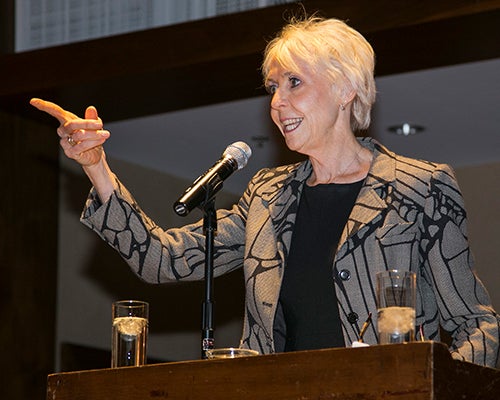
Martinez is the founding director of the Center for Research to Community Impact, which is dedicated to conducting high-quality applied research, disseminating evidence-based information, and building capacity among scholars to address the nature, origins, contexts, effects and elimination of disparities in education and health. He took genuine interest in the research of all his faculty, including Sharon Vaughn, executive director of The Meadows Center for Preventing Educational Risk. She distinctly remembers when Martinez asked to meet informally shortly after his arrival on campus.
It was the first time in 25 years at UT that a dean had asked to meet in my office simply to learn more about my research,
Vaughn said. He was highly interested in the research and work of his faculty, and he understood my work. More importantly, he appreciated the challenges of conducting randomized controlled trials in schools. His knowledge and support enabled the Meadows Center to accelerate our growth as a center and a resource to the state of Texas and the country.
Connecting Campus to Community
Martinez has always described himself as having one foot in the academy and one foot in the community
and, not surprisingly, the College of Education has served as a vital bridge between the University and communities across the state, ensuring that the work of Texas’ flagship university addresses the real needs of educators, leaders, students and families. By fostering strong relationships with universities, state agencies, nonprofit organizations and community leaders, its faculty and staff have translated academic research into meaningful partnerships that strengthen schools and local organizations. This collaborative approach has fueled open dialogue, innovative solutions and collective action, driving progress on critical issues such as educational access, teacher preparation and retention, and student success statewide.
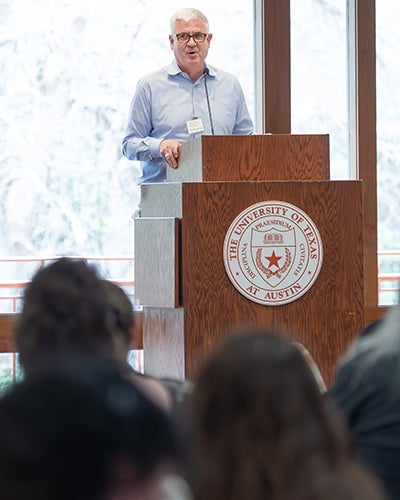
With strong and trusted community partnerships, the college is transforming education and health outcomes through approaches like Texas Education THRIVE, which stabilizes the Texas educator workforce by mentoring and retaining early-career teachers, and the LONESTARP3 network, applying research to practice and policy.
John Fitzpatrick was the founder and executive director of Educate Texas, a nonprofit committed to strengthening public and higher education. He met Martinez early in his tenure and collaborated on projects like the Texas Teacher Tipping Point study, which examined the differential outcomes of educator preparation programs for student achievement and teacher retention.
Charles is a natural connector with an urgent sense of responsibility to serve not only the students and faculty at the college, but to improve the lives of students, families and communities across Texas,
Fitzpatrick said. He deeply values partnership and authentic community input and has used his role to bring people together and make real progress on some of the biggest challenges we face in this state.
Investing in Education: Building Brighter Futures Together
Transforming education and health in Texas and beyond requires more than exceptional education, research and public service — it requires a community that cares. Thanks to generous donors and their passion and dedication to its mission, the college has more than doubled the ambitious fundraising goal established in 2022 at the outset of its What Starts Here campaign. This monumental achievement has secured historic and enduring support for student scholarships, academic programs, bold research initiatives, and the many faculty- and student-focused spaces in the George I. Sánchez Building and L. Theo Bellmont Hall.
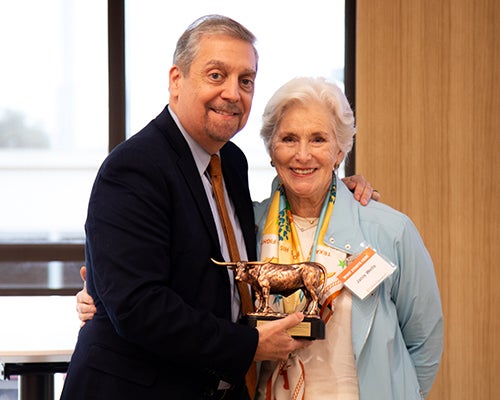
As a long-time donor, Janis Wells (B.S. ’68) believes supporting the College of Education means not only contributing financially but also using one’s voice to amplify the college’s impact on education across Texas. Wells graduated from UT in her early 20s as a single mother, and she credits the University and the college with shaping every aspect of her life, from her career path to her sense of purpose.
Eight years ago, just before the dean’s arrival, she joined the College of Education Advisory Council, a group of alumni, donors and passionately-engaged education, health and sport champions committed to supporting the college’s vision and service to Texas. Over the past two years, she has served as chair, emerging as both a dedicated advocate for the college as well as a model for philanthropic leadership within the community.
Working alongside the dean and the council has brought meaningful opportunities into her life and deepened her appreciation of the college’s impact on UT.
Dean Martinez is both a visionary and a connector, someone who brings people together around a shared purpose,
Wells said. He’s an exceptional listener with a rare intuition for what truly motivates people. He has a gift for drawing out their best, which is what I’ve valued most in working with him and what we’re excited to keep building on.
Charting New Horizons
For Martinez, what began as a move to Austin eight years ago quickly became a feeling of belonging. As a runner with a nearly 16-year streak of running every single day, I had to adjust to the summer heat, where even early mornings feel like 85 degrees with the pavement radiating warmth,
he said. Despite that challenge, I’ve loved exploring the city this way.

He’s a small part of Austin’s vibrant music scene as the guitarist and lead singer of the Deans’ List, a band made up of campus deans including Samuel Poloyac of the College of Pharmacy, on drums; Robert Chesney of the School of Law, on lead guitar; Allan Cole of the Steve Hicks School of Social Work, on bass guitar; and Richard Reddick, senior vice provost for Undergraduate Education (formerly dean of Undergraduate Studies), on keyboard and additional rhythm sections. With a few fun gigs both on and off campus, the group has sparked curiosity and embraced the spirit of a city that celebrates live music.
As he concludes his tenure as dean at the end of the summer, Martinez marks another inflection point as he prepares to return to his beloved day job
as a professor and researcher, continuing to conduct research to improve the lives of children, families and communities from vulnerable backgrounds, building research-community partnerships, and teaching and mentoring students.
While excited and ready to return to his core identity as a faculty member in the College of Education, he will continue to be open to new academic leadership opportunities. As he puts it, I never planned my career as a ladder from one leadership role to another. I’ve led because I’ve seen it as a calling at particular moments when I can make a unique impact. I will always remain deeply committed to higher education’s responsibility to transform lives and to open the doors of opportunity to future generations.