Biomechanics and NeuroRehabilitation
Department of Kinesiology and Health Education
Designed For
This program is ideal for candidates with a bachelor’s degree in kinesiology or a related discipline (e.g., biology, neuroscience, psychology, engineering) who are eager to deepen their understanding of human movement and rehabilitation science. Whether focused on research or applied practice, students should be motivated to meet competency requirements in areas like motor learning and neuromuscular control and to benefit from faculty collaboration and interdisciplinary mentorship.
Career Objective
Graduates emerge equipped for diverse career pathways in allied health sciences, academia, or industry. M.S. degree holders (thesis or report) often pursue roles in research labs, clinical rehabilitation or continue toward doctoral studies. M.Ed. graduates are prepared for applied roles in physical therapy, occupational therapy, teaching and program coordination. Across all tracks, students develop the expertise needed to translate biomechanical and neuromuscular science into interventions that enhance human movement and well-being.
At a Glance
Program Starts: Fall, Spring
Deadline to Apply:
Fall Priority: December 1
Fall Final: May 1
Spring Final: October 1
Length of Program:
M.S. with thesis: 24 months, 30 hours
M.S. with report: 24 months, 33 hours
M.Ed.: 24 months, 36 hours
Program Location: On campus
GRE Required? No
Shaping Innovators in Movement Science
Biomechanics and NeuroRehabilitation (BNR), formerly known as Movement and Cognitive Rehabilitation Science (MCRS), offers master’s degrees that are structured around a broad science-based curriculum. Each program includes coursework that covers topics related to physical rehabilitation, human biomechanics, motor learning and control.
We offer three master’s degree programs:
- Master of Science (M.S.) with Thesis (minimum of 30 credit hours).
- Master of Science (M.S.) with Report (minimum of 33 credit hours).
- Master of Education (M.Ed.) without Thesis or Report (minimum of 36 credit hours).
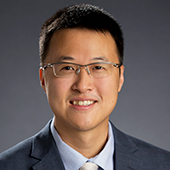
Program Director
Hao-Yuan Hsiao
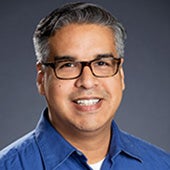
Graduate Program Administrator
Phillip Salazar
Program Overview
Application Requirements
Applicants must hold a bachelor’s degree from an accredited college or university. Students should have an undergraduate degree in kinesiology or a related field (e.g. biology, physics, physiology, neuroscience, psychology, biomedical or mechanical engineering, etc.).
All students applying for graduate study are expected to demonstrate competency in each of the following four areas:
- Human Anatomy (e.g., KIN 424K)
- Vertebrate or Human Physiology (e.g., INB 365S)
- Biomechanics (e.g., KIN 326K)
- Motor Learning (e.g., KIN 335C) or Neuromuscular Control (e.g., KIN 336)
Competency is typically demonstrated by the completion of specific undergraduate courses taken in kinesiology or other disciplines. Students may be admitted to the graduate program without having completed all of these core courses, with the condition that they are expected to fulfill these requirements either prior to starting the program.
Program Requirements
Students will take a set of required courses and electives offered by the department. Students also will have the opportunity to meet with their advisor to select supporting coursework from outside the department.
All organized graduate courses (i.e., not including Directed Research or Internship) must be taken for a letter grade. Supporting coursework taken outside the department may be taken on a credit/no credit basis with the adviser’s approval as allowed by the Graduate School.
All master’s students, except for non-thesis masters students, must enroll in KIN 197/397 RMS Graduate Seminar every fall and spring semester.
Master of Science with Thesis
Requirements
– Minimum 30 hours
– KIN 386 Research Methods (choose 1 of 2 options) (3 credit hours)
– Either Proposal Writing or Grant Writing (second year masters students only)
– At least one advisor-approved graduate statistics course (3 credit hours)
– KIN 698A & 698B – Thesis (6 credit hours)
– KIN 382 Biomechanics Laboratory Techniques (3 credit hours)
– Movement and Cognitive Rehabilitation Science courses (9 credit hours)
- KIN 395 Biomechanics in Clinical Settings
- KIN 395 Biomechanics of Sport
- KIN 395 Central Questions in Biomechanics and Motor Control
- KIN 395 Motor Control: Performance and Learning
- KIN 395 Motor Control: Neuromuscular Bases
- KIN 395 Neurological Rehabilitation
- KIN 395 Neuromuscular Aspects of Fatigue and Training
- KIN 395 Motor Control: Human Neuroplasticity
- KIN 395 Rehabilitation of Human Memory Systems
– No more than 6 credit hours of undergraduate coursework (which must be upper-division and may not include required prerequisites) may be counted.
Master of Science with Report
Requirements
– Minimum 33 hours
– One advisor-approved graduate statistics or research methods course (3 credit hours)
– Either “Proposal Writing” or advisor-approved graduate statistics course
– KIN 396T Directed Research & KIN 398R Report (6 credit hours)
– KIN 382 Biomechanics Laboratory Techniques (3 credit hours)
– Movement and Cognitive Rehabilitation Science (12 credit hours)
Choose one:
- KIN 395 Rehabilitation of Human Memory Systems
- KIN 395 Motor Control: Performance and Learning
- KIN 395 Motor Control: Human Neuroplasticity
Choose one:
- KIN 395 Motor Control: Neuromuscular Bases
- KIN 395 Neuromuscular Aspects of Fatigue and Training
Choose one:
- KIN 395 Biomechanics in Clinical Settings
- KIN 395 Biomechanics of Sport
- KIN 395 Neurological Rehabilitation
- KIN 395 Central Questions in Biomechanics and Motor Control
– 9 hours of adviser-approved coursework, of which:
- No more than 6 credit hours of undergraduate coursework (which must be upper-division and may not include required prerequisites) may be counted.
- No more than 6 credit hours may be taken outside the department.
Master of Education
Requirements
– Minimum 36 credit hours
– One advisor-approved graduate statistics or research methods course (3 credit hours
– Either Proposal Writing or advisor-approved graduate statistics course EDP Statistics Course Sequence
– Internship or culminating experience (e.g., KIN 397P) (3 credit hours)
– Movement and Cognitive Rehabilitation Science (12 credit hours)
Choose one:
- KIN 395 Rehabilitation of Human Memory Systems
- KIN 395 Motor Control: Performance and Learning
- KIN 395 Motor Control: Human Neuroplasticity
Choose one:
- KIN 395 Motor Control: Neuromuscular Bases
- KIN 395 Neuromuscular Aspects of Fatigue and Training
Choose one:
- KIN 395 Biomechanics in Clinical Settings
- KIN 395 Biomechanics of Sport
- KIN 395 Neurological Rehabilitation
- KIN 395 Central Questions in Biomechanics and Motor Control
– 18 additional hours of adviser-approved coursework, of which:
- No more than 6 credit hours of undergraduate coursework (which must be upper-division and may not include required prerequisites) may be counted.
- No more than 9 credit hours may be Independent Study (e.g., KIN 396T or 397).
- No more than 6 credit hours may be taken outside the department.
Faculty

Studies how biomechanics affect human physiology and locomotion performance. Particularly interested in how body dimensions and muscle-tendon mechanics affect metabolism, fatigue and speed.

Investigates neuromuscular control mechanisms during fatigue, training, rehabilitation and aging with single-motor unit recording, and designs electrical stimulation protocols for individuals with paralysis.
Accepting new students

Studies the biomechanical and neuromuscular control mechanisms of human movement and translates this knowledge into practical solutions that reduce walking-related disability.

Studies the biomechanics of infants in commercial baby gear and orthopedic devices, and parents/caregivers carrying infants during activities of daily living.
Research Labs
The department’s research facilities are state of the art. Our two core biomechanics labs are equipped with 3-dimensional force and motion capture systems and multichannel surface EMG equipment. One of the biomechanics labs features instrumented treadmills, a virtual reality surround, a metabolic cart, B-mode ultrasound units; the other features multiple force plates for assessing overground locomotion.
By participating in cutting-edge research, students will be prepared for a variety of ways to be engaged in and guide these specializations.
Human Locomotion Lab
Studies how biomechanics affect physiology and performance.
Neuromuscular Physiology Research Laboratory
Conducts studies specializing in the investigation of neuromuscular control patterns in healthy, clinical and aging populations with the use of intramuscular fine-wire recording and electrical stimulation.
Clinical Biomechanics and Mobility Lab
Seeks to understand the mechanisms of biomechanical and neuromuscular control of normal and pathological movements and to apply this knowledge to design interventions that improve functional movements.
Additional Information
Program Information for Current Students
Related Professional Organizations
- Society for Neuroscience
- Society for the Neural Control of Movement
- American Society of Neurorehabilitation
- Organization for Human Brain Mapping
- American Society of Biomechanics
- American College of Sports Medicine
- International Society of Biomechanics
- International Society for Biomechanics of Sport
- American Physical Therapy Association
- National Strength and Conditioning Association
- Texas Chapter of the American College of Sports Medicine
Let us know what your academic interests are within the College of Education and we’ll be in touch.