Jimmi Nicholson
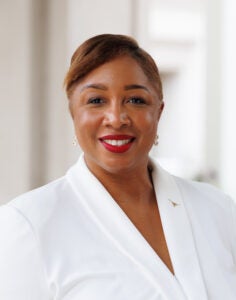
My journey through higher education has been anything but linear. Born into a low-income, extended family in the Broadmoor area of New Orleans, I was raised by a single, teenage mother who dropped out of high school before later earning her GED and a certificate in early childhood education. My grandmother, who had only a fifth-grade education, wore her pristine white uniform every day as she worked in the homes of wealthy families to provide for us. Watching their sacrifices taught me early on that education was the key to breaking the cycle of poverty — for me, for my family, and for generations to come.
I am forever grateful that both my grandmother and mother recognized my academic talent early and ensured I had every opportunity to prepare for college, build a successful career, and pursue a better life. Through programs like the Louisiana State University Explorer Program, Dillard University’s Concentrated Academic Program, and the TRIO Programs, I discovered my love for learning and envisioned a future where my education would not end with a bachelor’s degree. I dreamed of earning a terminal degree and using it to open doors for others like me.
My passion for higher education began to take shape as an undergraduate student at the University of Wisconsin–Parkside. As a midwestern transplant and a woman of color coming from the rich cultural fabric of New Orleans, I was suddenly immersed in a less diverse city, classroom, and campus environment. Although challenging, this shift pushed me out of my comfort zone and ignited an intense curiosity about how universities build community, foster belonging, and support student success. I became highly engaged on campus, and with encouragement from my hall director and later my graduate school professors, I realized that my future wasn’t just about my own education; it was about helping others access theirs.
I started my career in higher education through Residence Life and Student Affairs. I have always believed that every senior administrator should spend time in residence life because it is where theory meets practice. In that environment, I saw firsthand the diverse needs of students and how university policies can significantly affect their lives. However, most of my professional experience has been in law school admissions, a field I entered humbly and have since thrived in.
Serving as head of admissions at a flagship law school and later as the Director of Pipeline Development and Outreach at a top 20 law school, all without a J.D. or terminal degree, I have had the privilege of shaping not only admissions classes but also the trajectories of students’ lives. For low-income students, students battling self-doubt, and those daring to beat the odds, I have been more than an administrator; I have been a mentor, an advocate, and a constant reminder that they, too, belong. My role has enabled me to witness the transformative power of opportunity. Once unsure of their potential, they have gained admission, thrived in law school, graduated, and are in successful careers.
Ironically, even as I encouraged countless students to persevere, I faced my own setbacks. Despite my accomplishments, I experienced rejection from multiple doctoral programs. Those moments were deeply humbling but also clarifying. I realized that my journey, much like those of the students I champion, was never going to be easy, but it was also far from over.
It was during a conversation with Dr. Samuel Riley, an alumnus of the University of Texas at Austin Executive EdD Program and a fellow law school admissions colleague familiar with my story, that I found renewed hope. He reminded me of my own mantra, delayed, not denied, and encouraged me to consider the Texas EdD in Higher Education and Leadership as a place where my lived experiences, professional expertise, and passion for student success would not only be valued but amplified. He was right: the Texas program is not just a better fit; it is the right fit.
As I reflect on my journey, I see a consistent thread, a deep commitment to equity, access, and empowerment in education. My work in law school admissions and pipeline development has already impacted countless lives, but I know there is more to do. Pursuing the Texas EdD represents not just the next step in my career but a personal promise to continue dismantling barriers, opening doors, and changing the trajectories of students who, like me, dared to believe that their circumstances would not define their destinies.
Delayed, not denied. That has been my story, and I am ready to turn this next chapter into a powerful testament to what is possible when passion meets perseverance.