Born and raised in Calcutta, now Kolkata, India, Manish Manny
Panjwani attended Catholic and Jesuit schools, beginning an academic journey guided by his father, mentor and lifelong educator, Professor Santosh Panjwani.
He saw education as the great equalizer,
Manny says, and dedicated his entire life to educating himself. He believed that education is like a golden guinea that you can cash anywhere in the world.
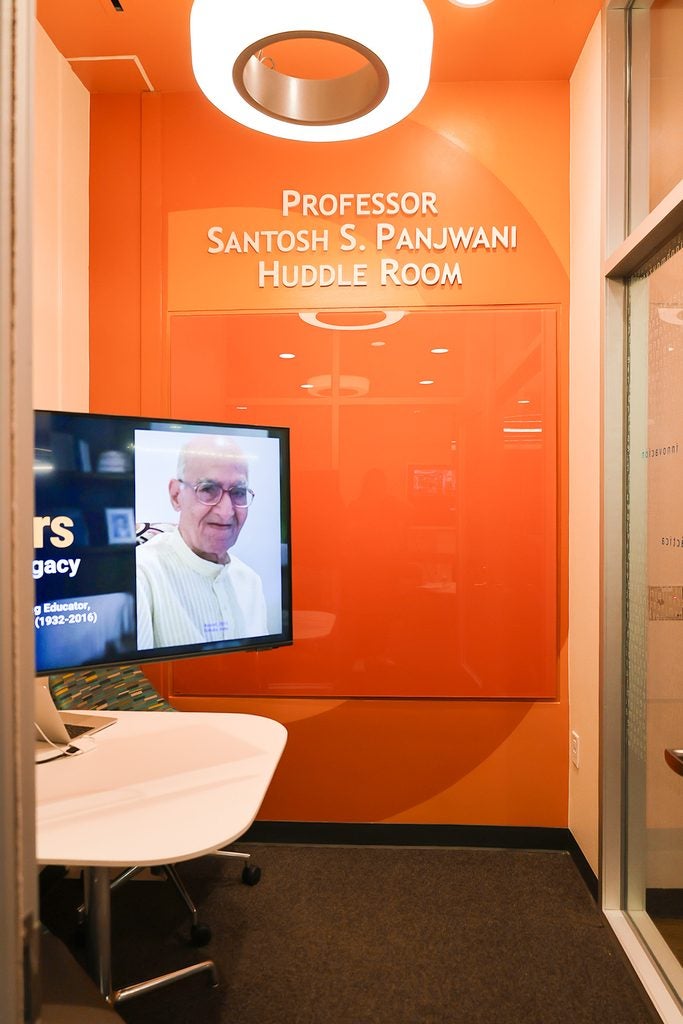
To honor his late father, Manny and his wife, Manju, have established the Manish and Manju Panjwani Endowment at The University of Texas at Austin’s College of Education to support juniors and seniors with demonstrated financial need who are preparing to become teachers. The college also dedicated the Huddle Room, a designated student space, on Sept. 10, which would have been Santosh’s 94th birthday.
From this day forward, students will come into this room to learn, connect and work together,
said Victor Sáenz, associate dean for Student Success, Community Engagement, and Administration. In doing so, they’ll carry forward the spirit of Professor Panjwani’s life and his belief in the power of education. These spaces have stories behind them—stories of people and families who believe in education and in what it can make possible.
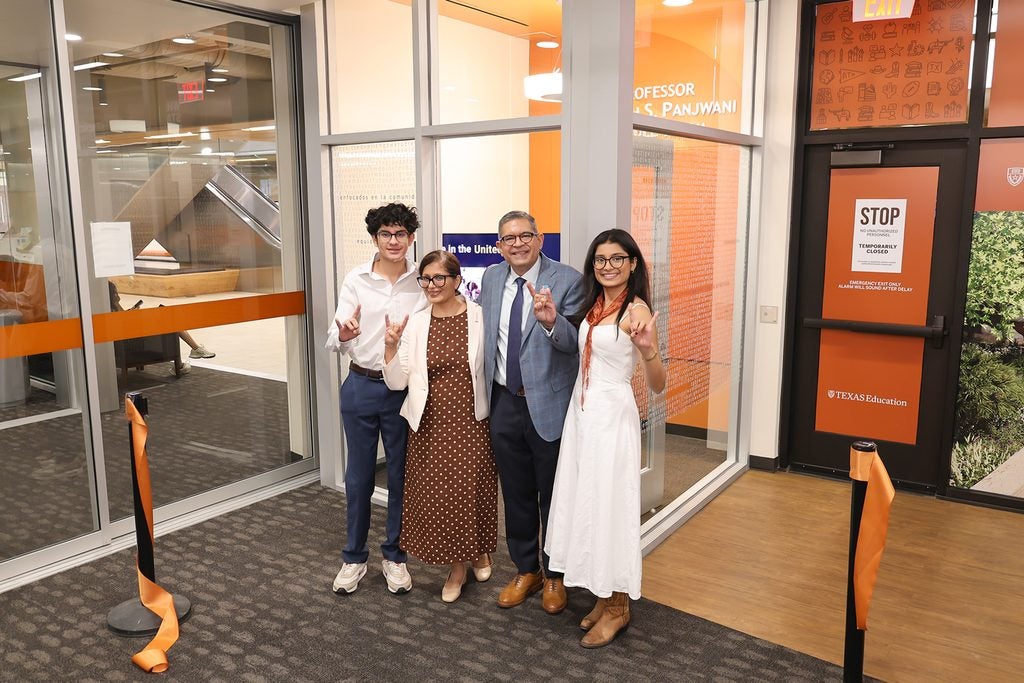
The Panjwanis’ daughter, Aarushi, is an alumna of the Canfield Business Honors Program at the McCombs School of Business, and their son, Aarav, is a freshman studying advertising in the Moody College of Communication.
The University has given us so much,
Manny says. To be able to give back was a natural choice.
Although no one in the extended Panjwani family attended the College of Education, Manny and Manju’s gift reflects their deep belief in the power of education. Their decision to support the college underscores the far-reaching influence of educators and the students they inspire.
These are future educators who go on to educate future generations,
Manny says.
From Poverty to University
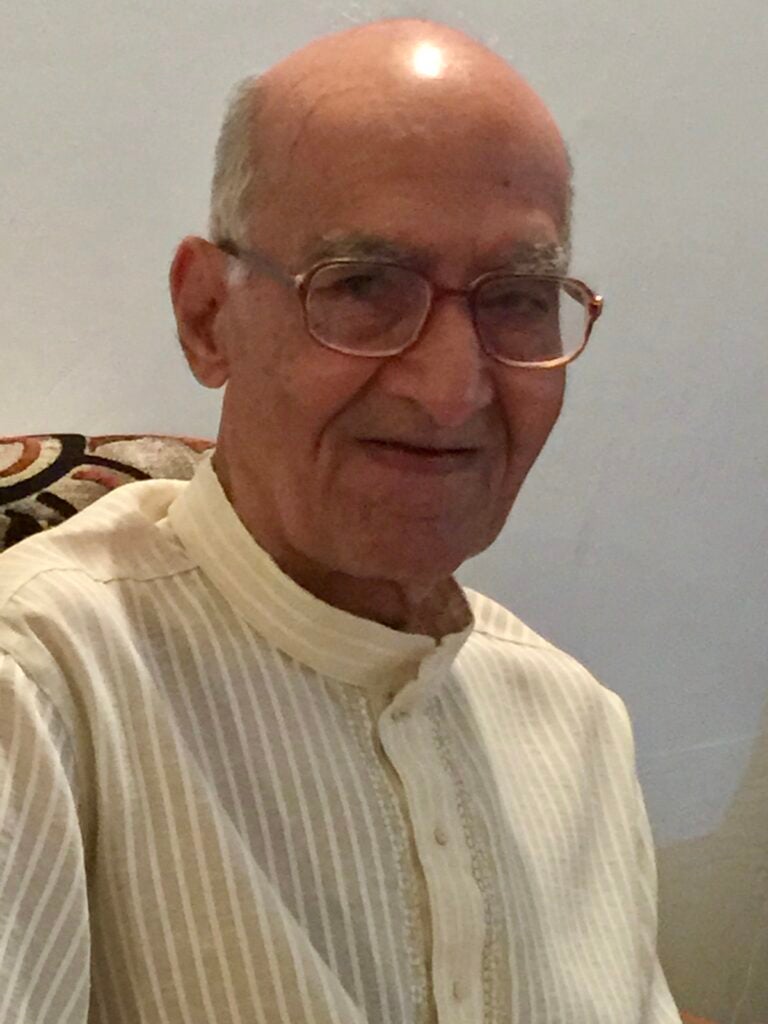
In 1947, when he was just 15 years old, Santosh and his family fled Pakistan following the Partition of India—which divided British India into two newly independent nations of India and Pakistan. They arrived in Bombay, now Mumbai, as refugees. Having lost almost everything, the family lived in makeshift camps in abject poverty.
Despite the hardships, Santosh committed himself to an ambitious academic path. With the help of interest-free student loans from the government of India, he put himself through school and became the first person in his family to attend college. He later helped his five siblings pursue their own educational goals.
From childhood, he was a diligent and accomplished student,
says his daughter, Jyoti Panjwani, a professor of English at Eastern Illinois University in Charleston, Illinois. As he grew older, he devoted himself to his studies and encouraged his siblings to do the same.
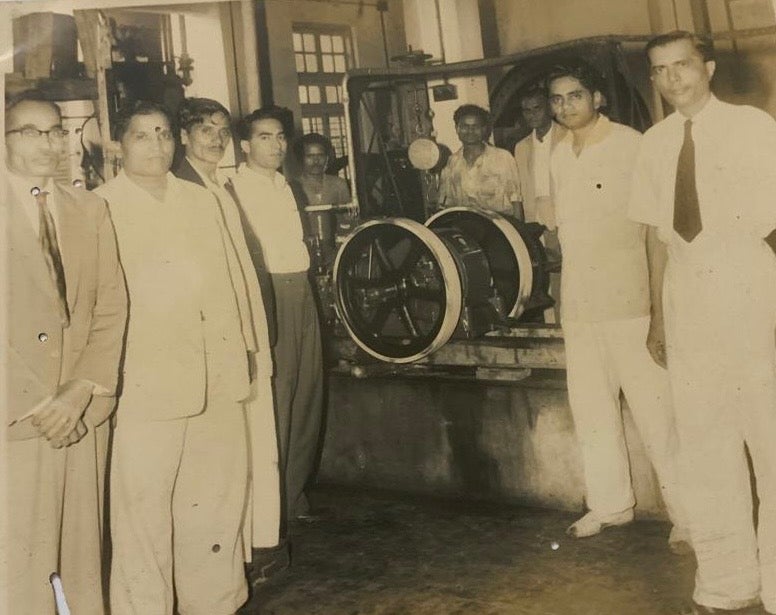
Santosh studied at the Victoria Jubilee Technological Institute in Mumbai, renamed Veermata Jijabai Technological Institute in 1997, where he worked as a ticket collector and store clerk to help fund his education. He earned his bachelor’s degree in mechanical engineering before becoming an assistant professor of mechanical engineering at the same institution.
Education rescued his family from destitution, so teaching became a natural calling,
says Jyoti.
Santosh later moved to Calcutta, where he spent most of his career at the Technical Teachers’ Training Institute (TTTI), now the National Institute of Technical Teachers’ Training and Research (NITTTR), Kolkata.
The institute helped bridge academia and industry by preparing educators and other professionals to meet the needs of a developing country. Santosh designed courses in faculty development and industrial skills while managing institutional partnerships and relationships with technology companies.
My father’s journey illustrates the generational upward mobility that education provides,
Jyoti says. For him, being an educator was a way to empower others and provide a path to individual and economic freedom. That vision was vital for the people of a partitioned and developing India, and it remains just as relevant today.
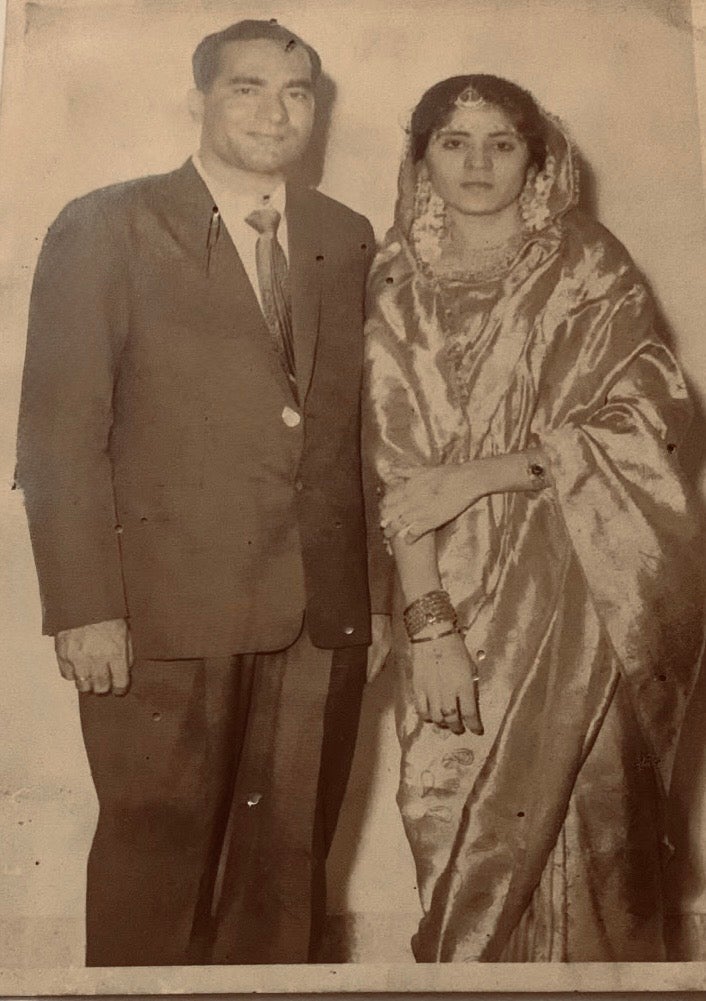
UNESCO awarded Santosh a scholarship to study in the United States, where he earned a master’s degree in education from the University of Illinois Urbana-Champaign before returning to Calcutta to continue his work at TTTI.
Santosh encouraged his three children to pursue higher education and choose paths that would allow them to build meaningful, independent lives.
Santosh was particularly passionate about educational opportunities for women, encouraging Jyoti to advance her academic goals despite traditional cultural and societal expectations. Jyoti went on to earn a doctorate from the University of Illinois Urbana-Champaign and became a professor, following in her father’s footsteps. Santosh’s oldest son, Arun, earned his bachelor’s degree in engineering in industrial electronics.
For Manny, his father’s steadfast belief in education defined how Santosh lived his life. He was always progressive and a big proponent of education and helping others grow,
Manny says. My father shared his knowledge with everyone he met and never expected anything in return.
From Curiosity Comes Wisdom
After earning his bachelor’s degree in economics, statistics and math from St. Xavier’s College in Calcutta, Manny immigrated to the U.S. at age 20. He earned a second bachelor’s degree in computer science from Georgia College in Milledgeville and an MBA from Georgia State University in Atlanta.
Decades later, at age 53, he earned his doctorate in education in organizational change and leadership from the University of Southern California in Los Angeles—continuing the commitment to lifelong learning instilled by his father.
Manny and Manju are now extending Santosh’s legacy through their gift to the College of Education, supporting future teachers who will carry his belief in the power of education forward.
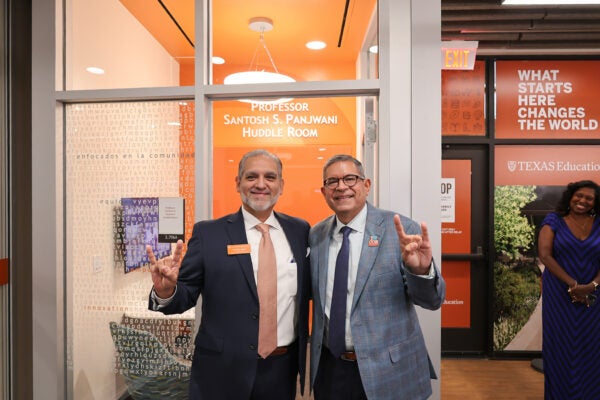
Manny continues to apply his father’s lessons today. We need educators because they shape the future of not just our communities and country, but the world,
he says. We see the impact that a lack of education can have and how much pain it can create.
Like his father, Manny believes in making transformative educational experiences accessible to more students. Those are the formative years for learning how to live in society and become a good citizen,
he says. From curiosity comes wisdom.