Health Coaching
Department of Kinesiology and Health Education
Designed For
Professionals who want to enter or advance in the growing field of health coaching need flexible, graduate‑level training they can complete while working full-time. This program is ideal for career changers seeking a meaningful role in health and wellness and for clinicians, educators and public health practitioners who want to add evidence‑based coaching skills to their existing practice. The program also strengthens professional advancement opportunities and provides a clear pathway toward graduate study.
Career Objective
Graduates of the Health Coaching Graduate Certificate may pursue or advance their careers in a variety of settings, including healthcare, corporate wellness, community health, and digital health. Potential professional roles include:
- Health and Wellness Coach
- Lifestyle and Behavior Change Coach
- Patient Health Coach
- Corporate Wellness Specialist
- Community Health and Wellness Coordinator
- Health Promotion Specialist
- Digital Health Coach
- Independent Health Coach
At a Glance
Program Starts: Fall 2027
Application Opens: Fall
Deadline to Apply:
May 1
Length of Program:
12 months
Program Location: Online
GRE Required? No
Coaching Healthy Behaviors
Knowing what people should do for their health is rarely the hard part. The challenge is helping them actually do it, and keep doing it. The Health Coaching Stackable Certificate prepares professionals to move beyond simply educating people about health and to build the skills needed to support meaningful, lasting behavior change. Rather than telling clients what to do, graduates learn a collaborative, client-centered approach that helps individuals identify their own goals, work through barriers and develop strategies they can sustain over time.
This 15-credit hour, fully online program is grounded in the science of behavior change. The curriculum integrates health behavior theories, social determinants of health, health coaching fundamentals and mind/body health, giving students a strong foundation for understanding why people change and how to guide them through it. Students will apply these coaching skills during an internship in a professional setting that is aligned with their interests and career goals, so what they learn can be immediately applied in clinical, community and wellness environments.
Designed for working professionals, the certificate is delivered in a flexible, primarily asynchronous format that makes room for career and life commitments without sacrificing academic rigor. Courses run in accelerated 6-week sessions, and students can complete the certificate in one year. Classes are capped at 25 students, creating a personalized learning environment with meaningful faculty engagement and active discussion with peers.
The certificate also opens the door to further study. All 15 credit hours stack into the M.Ed. in Prevention Science, fulfilling core requirements, electives and the culminating internship. Currently enrolled UT Austin graduate students are also eligible to participate.

Program Director
Lara Latimer
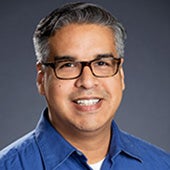
Graduate Program Administrator
Phillip Salazar
Program Overview
Application Requirements
The certificate is open to both non-degree-seeking and degree-seeking graduate students.
For Non-Degree-Seeking Applicants (Not Currently Enrolled in a UT Austin Graduate Program)
Applicants who are not currently enrolled in a graduate degree program at UT Austin will be required to meet the non-degree seeking student admission standards of the Graduate School listed below:
- A bachelor’s degree from a regionally accredited institution in the United States or a comparable degree from a foreign academic institution.
- A grade point average of at least 3.00 in upper-division coursework and in any graduate work already completed.
- A statement of purpose and current resume.
- International students whose native language is not English must also submit scores on the Test of English as a Foreign Language (TOEFL) or the International English Language Testing System (IELTS), unless otherwise exempt.
Additional notes for non-degree-seeking students:
- Transfer credits are not accepted.
- Non-degree-seeking students are not eligible for financial aid.
For Current UT Austin Graduate Students (Degree-Seeking)
Students already enrolled in a UT Austin graduate program will need to submit a program-specific application through the Department of Kinesiology and Health Education and retain existing degree-seeking status while completing the certificate.
Course Sequence
All courses will be delivered over a six-week period. With the exception of the Graduate Internship, each course can stand alone and does not require the completion of other courses.
Recommended Course Sequence
Fall
- PSC 395.6-WB Theories of Health Behavior
- PSC 395.28-WB Social Determinants of Health
Spring
- PSC 395.30-WB Fundamentals of Health Coaching
- PSC 395.17-WB Mind/Body Health
Summer
- PSC 397P-WB Graduate Internship
The graduate internship will be held at a site aligned with the student’s interests after all courses are completed. Faculty will maintain oversight through regular check-ins and communication with site supervisors.
Tuition
| Semester | Classes | Cost |
|---|---|---|
| Fall | 2 | $4,050 |
| Spring | 2 | $4,050 |
| Summer | 1 | $2,025 |
| Total Program Cost: $10,125 |
Faculty

Sexual health Sexual assault IPV HIV/AIDs Hookup culture Purity culture College students

My expertise spans prevention science, program development and evaluation, and community-engaged intervention design. My teaching draws on prevention science, public health, and psychology to understand and prevent adolescent health-risk behaviors. I...

Studies school and community-based interventions regarding physical activity, healthy eating, and the prevention of chronic disease.

Teaches from a holistic health perspective with a focus on personal health, including mental health, meditation and other stress management techniques.

My work primarily investigates how immigration policies (e.g., deportations, parental deportations) contribute to inequities in substance use, mental health, and use of treatment services among Latino populations.
Frequently Asked Questions
What is the cost of tuition?
| Semester | Classes | Cost |
|---|---|---|
| Fall | 2 | $4,050 |
| Spring | 2 | $4,050 |
| Summer | 1 | $2,025 |
| Total Program Cost: $10,125 |
Do I have to complete an internship?
Yes. The last class will be an internship that aligns with your career goals.
Can I use my veteran’s benefits?
You can use GI Bill tuition benefits toward your tuition. However, students in the online program are not eligible for the Hazelwood exemption. For more details, or to discuss your particular situation, contact the Dean of Students office.
Am I eligible for financial aid?
Non-degree seeking students who are admitted to the University for the purpose of earning a graduate certificate will not be eligible to receive federal financial aid.
Why should I choose the Health Coaching Certificate instead of a master’s degree?
The Health Coaching Certificate is an excellent option for professionals who want to expand their knowledge of health coaching and behavior change strategies without the time and financial commitment of a full master’s degree. In a shorter timeframe, you’ll gain practical, graduate-level skills that can help you better support the health and well-being of the individuals and communities you serve.
Can this certificate count toward a master’s degree later?
Yes. The Health Coaching Certificate is stackable, allowing certificate coursework to be applied toward the Prevention Science master’s degree. You can earn a valuable credential now and, if you decide to continue your education, seamlessly build on your progress toward an advanced degree.
What are the classes like?
While the format may vary by instructor, classes are typically organized into weekly modules that combine recorded lectures, readings, discussions, quizzes and projects. Students are expected to complete all assignments and activities within the assigned week.
Is the program completely online?
Yes. You can complete the entire program from your current location or the comfort of your home. If you are ever in Austin and would like to visit our beautiful campus, our faculty would be delighted to meet you in person.
Will I have access to the library? Campus recreation? UT football tickets?
You have access to all of the same resources as students who are in residence, including the library, campus recreation and other on-campus amenities. You are also eligible to purchase the Big Ticket, which is the student pass for athletic events.

Why the College of Education
From the Program Director
Access to health information keeps growing, but many people still struggle to turn that knowledge into lasting habits. We created this program to give professionals from diverse backgrounds the evidence-based, client-centered coaching skills to close that gap.
— Lara Latimer, Ph.D.