For more than two decades, Melissa Chavez has devoted her career to expanding educational opportunities for students across Texas.
From teaching elementary school in Austin to serving as executive director of UT Public Schools, operated by the College of Education, Chavez has helped shape transformative learning environments for thousands of children. Today, UT Schools include UT Elementary School (UTES), UT University Charter School (UTUCS) and UT High School Special Purpose District (UTHS), employing approximately 400 educators.
As an associate professor in the Department of Educational Leadership and Policy, Chavez drew on her dedication to educational equity and collaborative leadership, helping address the unique challenges facing diverse PK-12 schools and underserved communities.
Throughout her career, Chavez championed innovative educational experiences and opportunities while empowering educators, students and families to thrive in an ever-changing educational landscape. She also served as a longtime mentor and coach to future teachers, social workers, psychologists, speech pathologists and nurses who received clinical training through the schools.
Her colleagues recognize that dedication. I have been privileged to witness the depth of Melissa’s impact and the integrity she brought to every decision she made,
says Victor Saenz, COE’s associate dean of Student Success, Community Engagement and Administration. We are stronger today because of her vision and unwavering commitment. She has built an institution that has supported thousands of children and will continue to serve students for generations to come.
A lifelong Longhorn and triple COE alum, Chavez earned her bachelor’s degree in special education and master’s degree in educational administration before completing her doctorate in special education with a concentration in emotional and behavioral disorders.
As she prepares to retire in August and move back to her hometown of Brownsville, Texas, Chavez reflects on her remarkable career, the impact of the UT Public School System and her vision for the next generation of educational leaders.
In 1997, you began your teaching career at Zilker Elementary School in Austin. Six years later, you were asked to help build UT Elementary—from the ground up. What was that experience like?
During the early 2000s, there was a big push in the Texas Legislature for charter schools. Lawmakers passed a bill allowing universities to open charters, and UT Austin was one of the first in the state to do so. It was also met with significant contention. We were literally building the school while protesters gathered on Sixth Street because they viewed the charter school as a threat to the public education system.
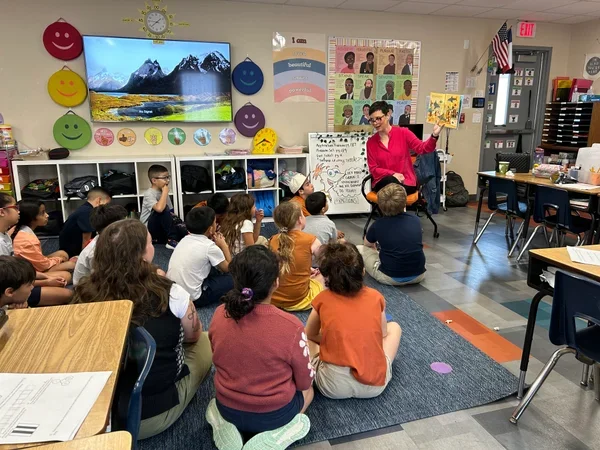
To me, it didn’t matter that it was a charter school. It was about being part of The University of Texas. We were creating a research-based, tuition-free school in East Austin, where the majority of students were Hispanic and Black. As a Hispanic woman, that prospect was incredibly meaningful to me.
I think the hardest part of my job was running an elementary school while navigating the requirements of both the Texas Education Agency and the Texas Higher Education Coordinating Board. Since UTES operated as a public elementary school and a university-based laboratory school, we had to comply with two different sets of regulations. Balancing the expectations of the two agencies was one of the most challenging parts of my role.
In 2014, you expanded your work to UTUCS, which serves students with diverse needs across 23 campuses. What are some of the challenges—and rewards—of teaching students who come from difficult backgrounds?
We meet children where they are. Most of our classrooms are located inside residential treatment facilities, foster care homes and psychiatric hospitals across the state. That gives students the opportunity to attend school every day in a safe space, learn from certified teachers, and make academic progress despite difficult circumstances.
I felt so privileged to help lead a charter school that serves some of the most vulnerable children in Texas. Many of our students have experienced significant trauma, and many qualify for special education services because of emotional or behavioral disabilities. We need to understand what they’re carrying with them and be intentional about how we show up. Creating learning environments where students feel safe and supported was always important to me.
Without these schools, many students would leave facilities years behind academically, without the credits they need to graduate. By ensuring they continue their education while receiving treatment, we’re helping create opportunities for them in the future.
To me, this is one of the most meaningful ways that UT has served communities across the state.
As executive director, you oversaw UT Elementary, UT Charter and UT High School. For two years, you led all three. What was the biggest challenge you experienced in your role?
I was diagnosed with breast cancer when I was only 42. For seven and a half weeks, my daily routine was the same. I’d get my Starbucks coffee, go to radiation treatment and head straight to work. It was during that time that I was asked to take responsibility for the charter school in addition to my other leadership roles. Feeling like I was needed gave me an added sense of purpose. In many ways, I feel like it saved my life.
That’s a powerful story. Focusing on UTHS, the school has evolved significantly over 27 years. It now provides flexible online programs that allow full-time students to pursue a high school diploma or take individual courses. Can you talk about those changes?
When UT High School first opened, it was a private school that charged tuition. Today it’s a public school serving about 1,500 students, with a wide range of needs. Many struggle in traditional school settings or face mental health issues. Others need a more flexible environment, including student-athletes, children of military families and homeschoolers.
One of our priorities was hiring social workers and special education teachers because students needed more than traditional instruction. We needed to figure out how to support them academically, emotionally—or both.
The demand for flexible learning continues to grow. Last session, Texas lawmakers passed a bill allowing school districts to create virtual campuses. More families are looking for alternatives to traditional brick-and-mortar schools, and I think that trend will continue with greater educational options.
As you prepare to step away from your leadership role, what advice do you have for the incoming executive director, Associate Professor of Practice Debra Cantú?
You can’t make a wrong decision if you’re guided by what’s best for the students. Whether you’re considering a new program, partnership or policy, ask yourself: Is this in their best interest?
If the answer is yes, you’re on the right path.