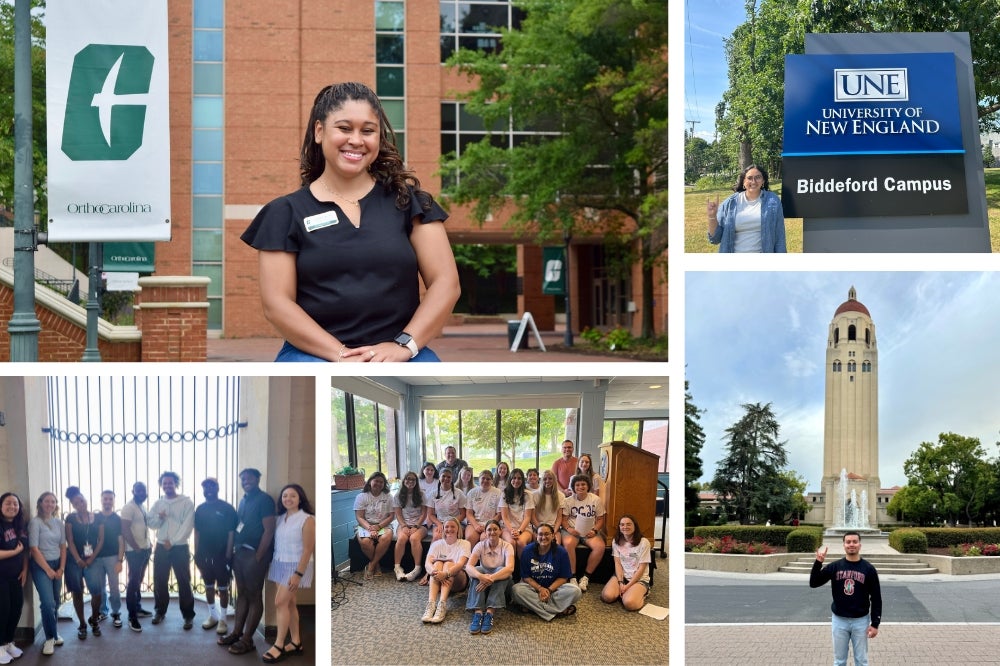
This summer, College of Education master’s students aren’t just studying higher education, they’re helping shape it.
Through internships at colleges and universities across the country, students in the Program in Higher Education Leadership and Policy are stepping into leadership roles that give them firsthand experience in student affairs, campus programming, residential life and orientation initiatives. The experiences are expanding their perspectives and preparing them to become the next generation of higher education leaders.
PHELP is devoted to the scholarly study of higher education, including its students, institutions and place in society. A unique feature of our program is that students are required to have an internship as part of their studies,
says Michael Goodman, assistant professor of practice in the Department of Educational Leadership and Policy and PHELP co-coordinator. It’s always such a fantastic opportunity for students to go to different institutions and institution types, often in different states, where they can see the practice of student affairs work in a different context from UT or Texas.
Over the summer, 17 PHELP student interns spent—or continue to spend, in those ongoing internships—more than 40 hours each week doing hands-on work in university settings, with a quarter working out of state and the rest in Central Texas. For many of our students, internships like these offer them supervision experience as well as program and event management experience,
says Goodman, 2025-26 Maxine Foreman Zarrow Endowed Faculty Fellow in Education.
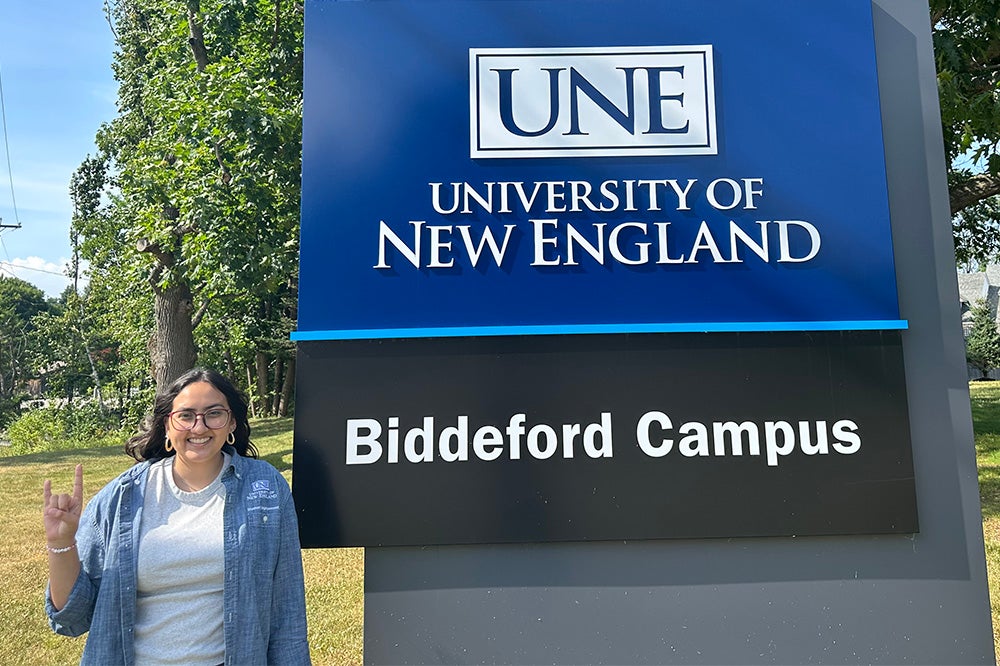
Among those students, Jillian Sanchez, originally from San Marcos, Texas, interned at the University of New England in Biddeford, Maine. There, she supervised a team of student orientation guides and collaborated across UNE departments to support both the guides and incoming students throughout the orientation process.
The experience has strengthened Sanchez’s ability to work across professional levels and supervise students effectively, she says. I also gained insight into how leadership styles vary regionally, which broadened my understanding of student development,
adds Sanchez, who will return to COE with a more practice-informed perspective and insights to share with her cohort. After her COE graduation in 2027, Sanchez intends to work in a student-facing role in higher education.
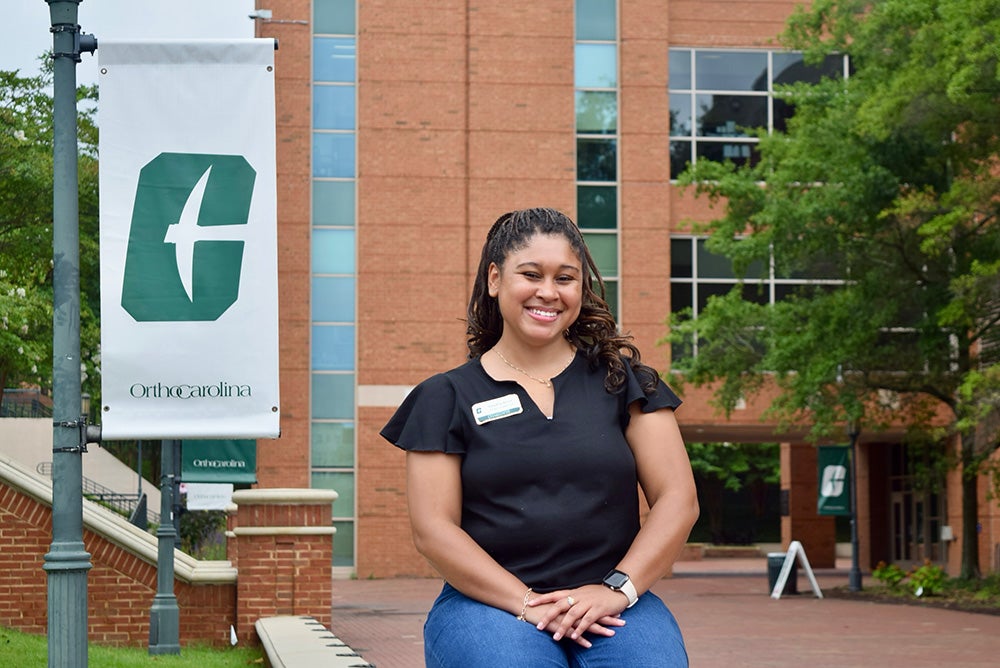
Kandria Knox of Austin spent the summer at the University of North Carolina at Charlotte. There, she worked with the Fraternity and Sorority Life team to support student engagement initiatives, present to incoming students and families during orientation, coordinate the school’s TELOS program for graduating seniors, and assist with educational programs that support the success and development of fraternity and sorority members.
Working at UNC has taught Knox to be a more confident and effective presenter, she says. Presenting to large groups regularly pushed me outside of my comfort zone and helped me strengthen my public speaking skills,
Knox says. Since presentations are a common part of our coursework, I’m excited to bring those skills back to the COE classroom.
Following her graduation from COE in 2027, Knox plans to work in higher education, specifically student affairs.
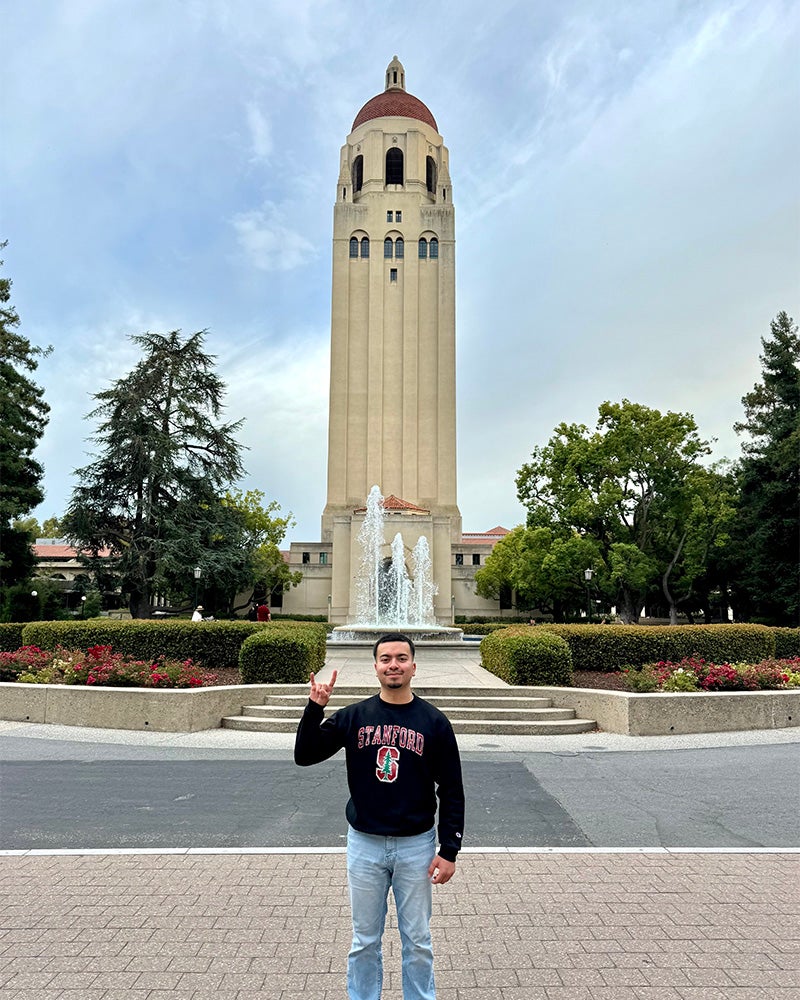
Dennis Herrera from Houston serves as a House Director at Stanford University through Aug. 16, where he oversees the residential experience for high school students participating in Stanford Summer Session, a transformative pre-college experience that prepares students for higher education. As a residential house lead, Herrera supervises a team of Stanford undergraduate resident advisors, designs and implements educational programming and is responsible for the overall safety, well-being and success of residents.
I learned how intentional residential programming, student support and leadership can significantly enhance students’ academic engagement, personal growth and sense of belonging,
Herrera says. This experience reinforced my passion for educational access and student development and showed me how thoughtful program design and student affairs leadership can create transformative learning environments.
He will return to COE studies with a deeper understanding of higher education policy, student success and equitable access to educational opportunities.
Following his COE graduation in 2027, Herrera plans to attend law school and pursue a career in civil rights and education law.
Goodman explains that the host universities rely on the contributions of COE students.
For many institutions, interns such as these are essential for the summer operations of their programs,
he says.