STEM Education
Department of Curriculum and Instruction
Designed For
This program is designed for current educators who want to deepen their understanding of STEM teaching and learning through a research-driven lens. It is ideal for individuals seeking to advance their careers in K–12 education, educational organizations or instructional design.
Career Objective
Graduates are prepared to become innovative educators, instructional leaders, and researchers in STEM education. The program equips students to drive meaningful change through evidence-based practices and a strong foundation in the learning sciences.
At a Glance
Program Starts: Fall
Deadline to Apply:
December 15
Length of Program: 24 months
Schedule: Flexible
Program Location: On campus
GRE Required? No
Transforming STEM Education for a Changing World
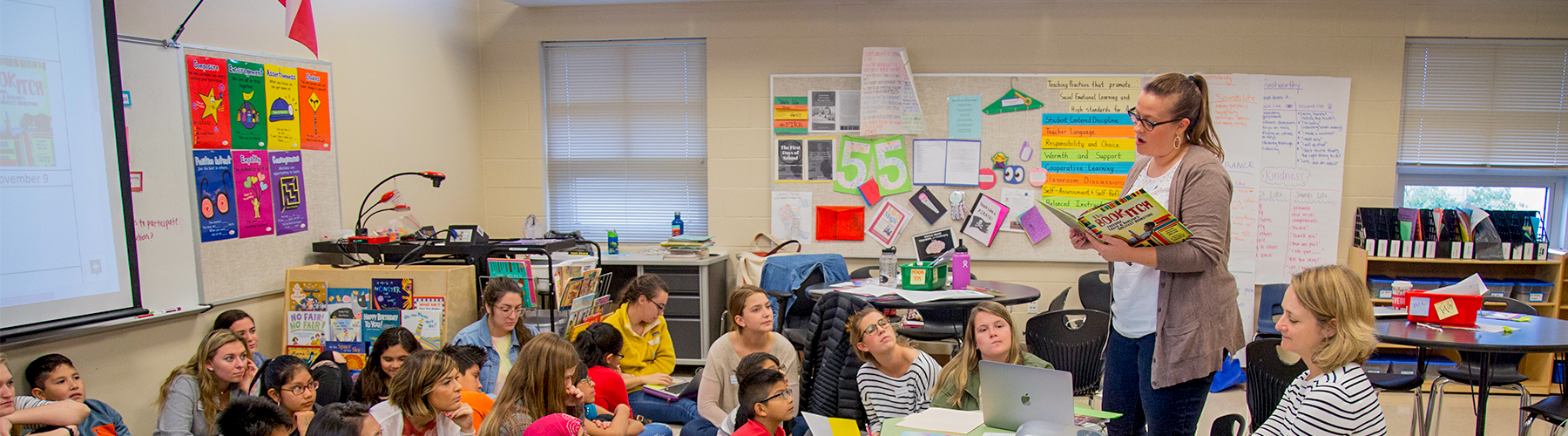
Science, Technology, Engineering, and Mathematics (STEM) play a critical role in addressing societal challenges and driving innovation. Our master’s programs emphasize advancing STEM knowledge and effective teaching practices through innovative research, teaching and scholarship informed by the learning sciences. Students develop the skills to enhance instruction, contribute to educational research and make meaningful impacts across classrooms and educational organizations.
Our programs offer a distinctive, research-focused experience that explores how students learn and how educators can transform STEM teaching. Students engage directly in research on STEM teacher education and learning, gaining insight into current challenges and opportunities shaping the field. Faculty bring diverse academic perspectives and active research agendas, ensuring that coursework is grounded in real-world issues and emerging trends while focusing on expanding STEM knowledge, fostering curiosity and advancing effective teaching practices.
Program Area Coordinator, Advisor
Carlos Nicolas Gómez Marchant

Graduate Admissions Coordinator
Stephen Flynn
Program Details
Application Requirements
Undergraduate degree in a STEM field—or substantial evidence of prior undergraduate STEM coursework as evidenced on transcript.
Teaching experience is preferred but not required.
A minimum GPA of 3.0 is a university requirement, although petitions to be admitted with a lower GPA may be submitted.
Application Guidelines
All applicants must apply through the UT Austin Office of Graduate and Postdoctoral Studies application, where you will submit:
- Biographical information
- Resume or CV
- Statement of purpose
- Transcripts
- Letters of recommendation
Applicants are encouraged to begin the application process well in advance of the deadline.
Select STEM Education (32800) as your major when you apply.
Program Requirements
Master of Arts (M.A.)
Thesis Option
Designed for: Students interested in developing research expertise and pursuing leadership roles in education or further graduate study.
- Emphasizes independent research and scholarly inquiry
- Requires a thesis (6 credit hours) completed over at least two semesters
- Includes 9 hours of graduate coursework in a STEM discipline
- May be waived for students with a prior master’s degree in a STEM field (e.g., physics, chemistry)
- Not designed for students seeking teacher certification
Non-Thesis Option (Academic Year)
Designed for: Students seeking to strengthen their practice as educators or move into leadership roles in teaching or curriculum development.
- Coursework-only degree (no thesis requirement)
- Completed primarily during the academic year
- Typically completed in two years
- Not designed for students seeking teacher certification
Degree Requirements
Total Credit Hours
- Thesis option: 36 hours
- Non-thesis option: 33 hours
Core Coursework (15 Credit Hours)
All students complete the following five courses:
- STM 385 Knowing and Learning in STEM Education
- STM 386 Curriculum History in STEM Education
- STM 390-1 Equity in STEM Education
- STM 390-2 Research on Teaching and Teacher Development in STEM Education
- STM 390T Advanced Topics in STEM Education
STEM Content Coursework (9 Credit Hours)
- Coursework in a STEM discipline (e.g., engineering, mathematics, natural sciences)
- Must be at the upper-division undergraduate or graduate level
Research Methodology (3 Credit Hours)
- One course in research design or quantitative/qualitative methods
- Must be approved by the graduate advisor
Supporting Coursework
- Thesis option: 3 hours
- Non-thesis option: 6 hours
- Selected in consultation with a graduate advisor to support academic and professional goals
Thesis Requirement (Thesis Option Only)
Six credit hours of thesis coursework completed over at least two semesters.
Master of Education (M.Ed.)
Designed for: Certified educators seeking advanced study in STEM education.
The M.Ed. follows the same coursework and thesis requirements as the M.A. with thesis option
Additional requirement: Must hold current teacher certification at the elementary or secondary level.
Faculty

Studies engineering and STEM higher education, including faculty, graduate students and undergraduates.

Explores the intersection of the sociopolitical and mathematical lives of children with a focus on identity and learning.

Investigates intersections of race, language, and mathematics through the experiences of Latinx students learning and doing mathematics.

Research explores the intersections of multilingualism, scientific sensemaking, and teacher education, with a specific focus on the ways multilingual students engage in science practices through translanguaging.

Focuses on the ways students learn in science courses using computational modeling.

Engages humanizing research approaches to examine equity-focused PK-16 STEM teaching and learning across urban contexts with a focus on Black girls.

Studies the ways culturally and linguistically diverse groups of people use core ideas, frameworks, and practices of Science, Technology, Engineering and Mathematics (STEM) to explain phenomena or to solve problems that are meaningful and consequenti...

Teaches preservice K-12 teachers how to teach meaningful STEM content in innovative, student- and community-centered ways.

Dr. Yeh's research examines the intersections of race, language, and disability to provide a more nuanced analysis of the constructions of ability in mathematics classrooms and mathematics education systems. Her scholarship centers on partnerships wi...
Additional Information
Let us know what your academic interests are within the College of Education and we’ll be in touch.