The College of Education’s talented faculty are changing the world every day from the Forty Acres in the fields of education, health, sport and beyond. But during the summer, many take their research, and often their students, across oceans and borders to explore new ideas, begin innovative research projects and dive deeper into cultures across the globe.
From study abroad programs in partnership with Texas Global, to learning initiatives that partner with higher education programs nationally and research partnerships worldwide, our COE faculty annually pool their resources to expand the college’s indelible mark.
Study abroad programs and research opportunities at COE are intercontinental and most are accessible to student researchers through online applications and faculty invitations. Here is just some of the remarkable international work that the college’s faculty embarked on last summer. Be sure to keep your eyes open for opportunities to join in 2026.
Olympia, Greece
During the summer, Department of Kinesiology and Health Education associate professor Charles Stocking serves as program director for the Sport and Education Program in Olympia, Greece, co-organized by the International Olympic Academy (IOA) and Harvard University’s Center for Hellenic Studies. For over a decade, Stocking has welcomed 40 to 50 graduate and undergraduate students from across North America and Europe, including a few Longhorns and many student-athletes, to the IOA’s beautiful educational campus just a couple hundred meters from the ancient Olympics campus for five days of seminars and sightseeing.
Most recently, the program shifted over the last two years from a research conference with diverse themes on ancient and modern sport to an educational program focused on the interconnection between sport and education from ancient Greece to the modern era. Thanks to the generous support of Harvard and the IOA, students are only expected to pay the cost of their flight.
The five-day program, which features Olympians, historians and researchers, explores the connection between sport and education in ancient Greece, followed by sport and education in the lens of the Olympic revival at the turn of the 20th century. The program wraps up with the enduring connection between sport and education today comparing European and American systems. Stocking also guides students through a tour of the archeological site of Olympia and the two museums on site.
Going back to Olympia, the ancient site that is the birthplace of the Olympics, is really fun,
Stocking said. Students get to run on the ancient track — the same track that people were running as early as 500 B.C.
He added that it provides a unique opportunity for participating student-athletes to meet others in their same position from schools across the country and Europe while allowing them to talk to each other in a non-competitive context.
Students can get involved through an application portal that is open to all students. This opportunity is currently not for academic credit. Please contact Charles Stocking to learn more.
Puebla, Mexico
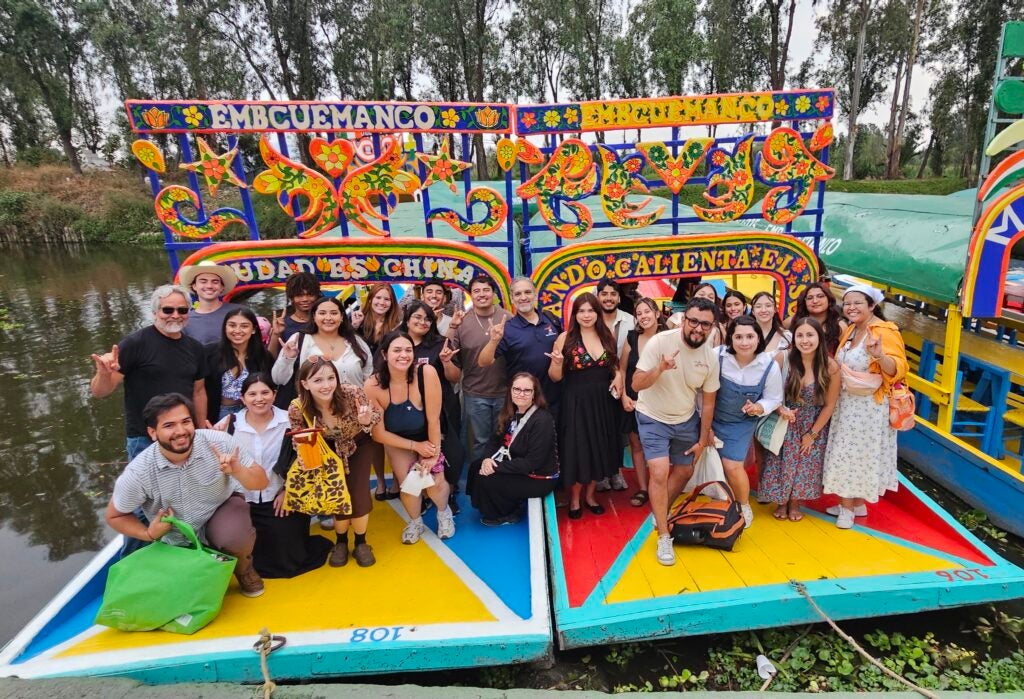
For four summers, Department of Educational Leadership and Policy professor Victor Sáenz has taken students to study internationally in partnership with Texas Global to Puebla, Mexico for a Maymester,
a course taught over the month of May.
The program is hosted in partnership with Universidad de las Américas de Puebla (UDLAP) and Texas Global. This past summer, Sáenz and his co-instructors Rodrigo Aguayo and Emmet Campos took 20 students from across UT Austin for two-and-a-half weeks of classes and planned activities. The course, titled Latinx Identities Across the Americas, explores themes of education, history, culture and identity and is based out of Puebla with short trips to Mexico City and Oaxaca.
Sáenz said this area of the Americas naturally lends itself to full cultural immersion as it is home to many historic points of interest, religious artifacts, vast museums and cultural centers, and important archeological sites. Students can visit with artisans and explore local history, customs and cultural activities, learning how each aspect of heritage impacts identity for themselves and others.
The program attracts a variety of students and most feel transformed in one way or another,
he said. They connect with their cultural and heritage roots in many ways, either retracing steps their families have taken or reflecting on their own identities.
Sáenz said the mission of the program is for students to dive deeper into their own identity shaped by their cultural heritage, while also shedding a light on the commonalities that exist around identity across America and the forces that influence how we interact with each other.
Over the next two summers, the course will take place in Barcelona, Spain and will continue to explore common ties that bind peoples around the globe. He said it is a unique way for students to reflect upon their identity by taking them out of their comfort zone to examine the origins of colonialism, history and culture, all while nurturing personal growth.
These study abroad experiences are powerful because they reshape our notions about others and ourselves and allow students to reflect critically on their experiences to reaffirm or redefine their identity,
Sáenz said. That is going to change them for the long term and give them a whole new outlook on how they interact with others throughout their lives and careers.
Students can inquire about the program and financial aid opportunities with Texas Global.
Japan and Thailand
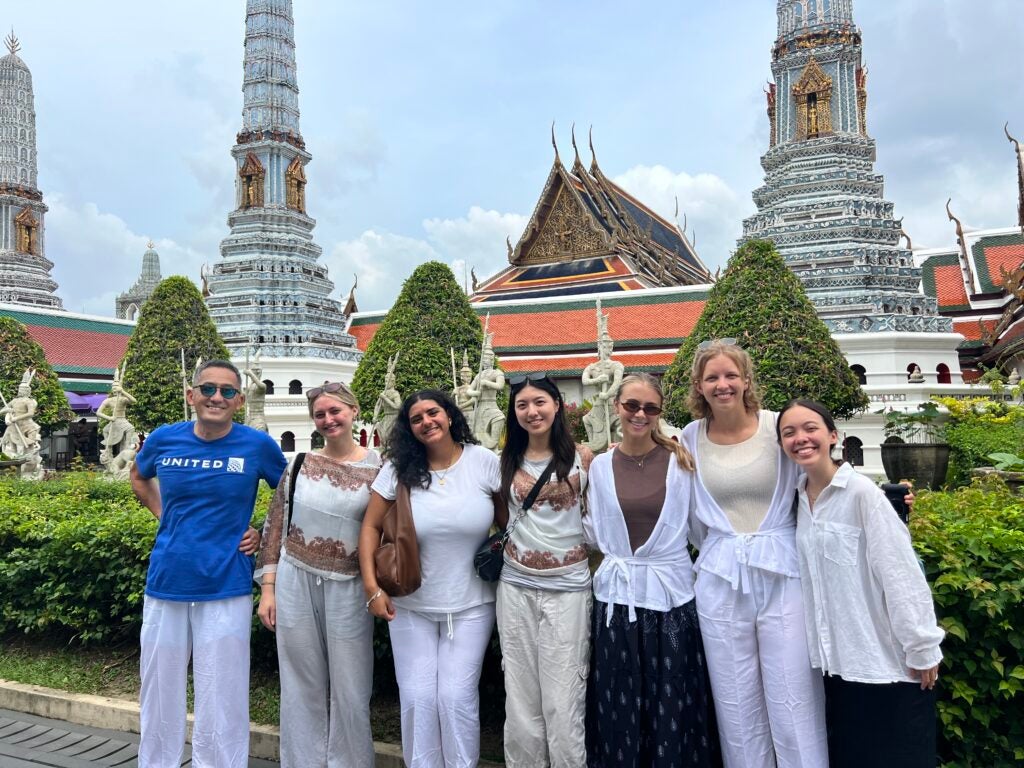
Department of Kinesiology and Health Education Professor Hirofumi Tanaka returned to Japan last summer a decade after completing research on the physiology of Japanese female pearl divers. He wanted to follow up on his discoveries and pose new questions of their body’s response to their challenging work.
The women, whose average age 10 years ago was 65, dive dozens of times per day to collect pearls hidden in oysters, pearls, seaweed, octopus and other sea animals. The first study was based on the premise that every time someone dives into water, they experience a diving reflex which causes their heart rate to go down by about 50 percent. This creates a circulatory challenge to maintain cardiovascular functions, which means the pearl divers would have adopted a very particular cardiovascular structure similar to that of diving mammals like whales and seals after decades of diving.
Their findings showed that they indeed had a particular anatomical structure of their cardiovascular function above other people of a similar age.
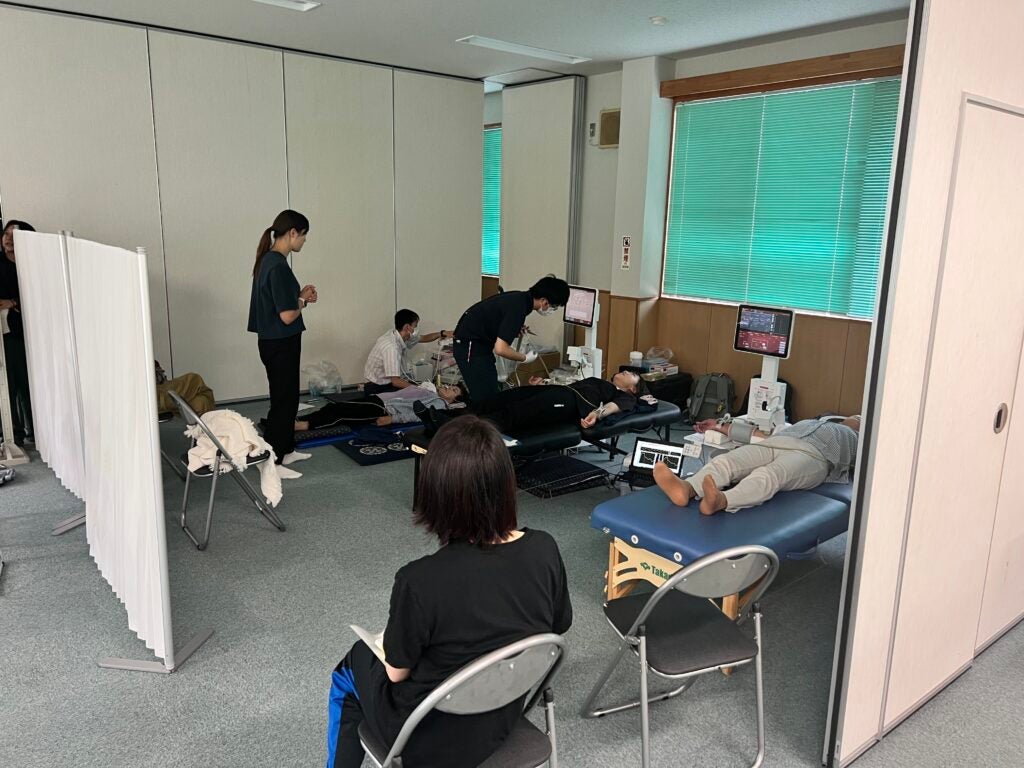
Students conducting research at a clinic in Bangkok.
Tanaka returned to Japan to assess some of the same women from 10 years ago, who are now 75 to 80 years old and continuing to dive, as well as new people across three cities. This time, the investigation considered the size of their spleen, which produces red blood cells that are a storage molecule for oxygen. The idea behind the study was to measure the size because people suffer from lack of oxygen when diving into water, so if someone were to dive repeatedly, the size of the spleen would go up.
Following his time in Japan, he traveled to Thailand to study Buddhist walking meditations because it has been proven to help those in Thailand maintain walking routines and stay active by increasing the speed of their walking as a form of exercise.
Many people have a new year’s resolution to walk, but after a few months many quit,
Tanaka said. The question is what happens when you incorporate religion into it because religion is a lifelong habit.
Tanaka focused on whether the regular walking program and even glycemic program for diabetics would be effective for Thai people who identify as atheist instead.
This project was funded by Texas Global through the Global Career Launch, which sends UT Austin students to a global location to conduct research. Tanaka took four undergraduate students and one graduate student with him. The results from data are still pending.
I think the COVID-19 pandemic taught us that the world is connected and when one thing happens in one part of the world, it can have a global impact,
Tanaka said. So, I think it is really important for students to understand different cultures and think about science as a global effort.
United Kingdom
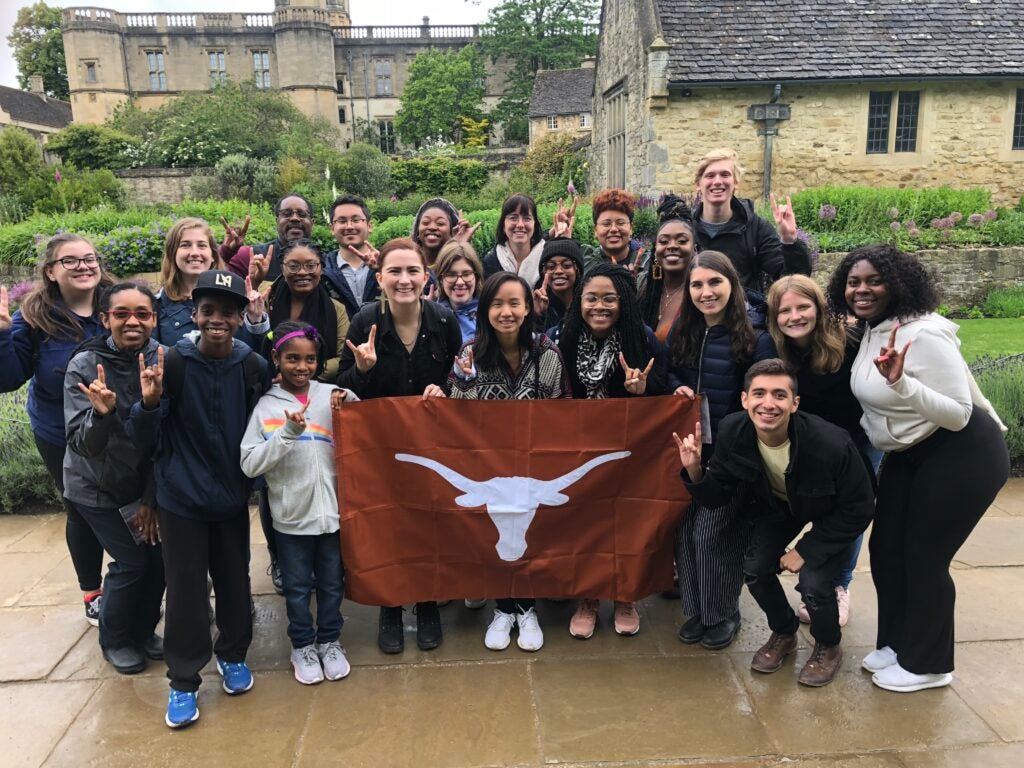
Several years ago, Department of Higher Educational Leadership and Policy Professor Richard Reddick was connected to a member of Texas Global through a COE alumna who was then taking his class.
As a child who lived in the United Kingdom for 10 years, Reddick had always wanted to study abroad and hoped he would someday travel to the UK with students.
He explained that the schools in the UK are similar but different enough, and as a scholar on equity, he was interested in exploring issues of equity from race to socioeconomic across the two structures. He applied to create the program and launched the study abroad course.
In 2019, Reddick took 22 students to Cambridge, where they spent a month conducting comparative research. Due to the COVID-19 pandemic, the program halted for one year and students were unable to travel for another. Then, in 2022, he took students across the ocean again, this time with Associate Professor Joshua Childs as a co-instructor.
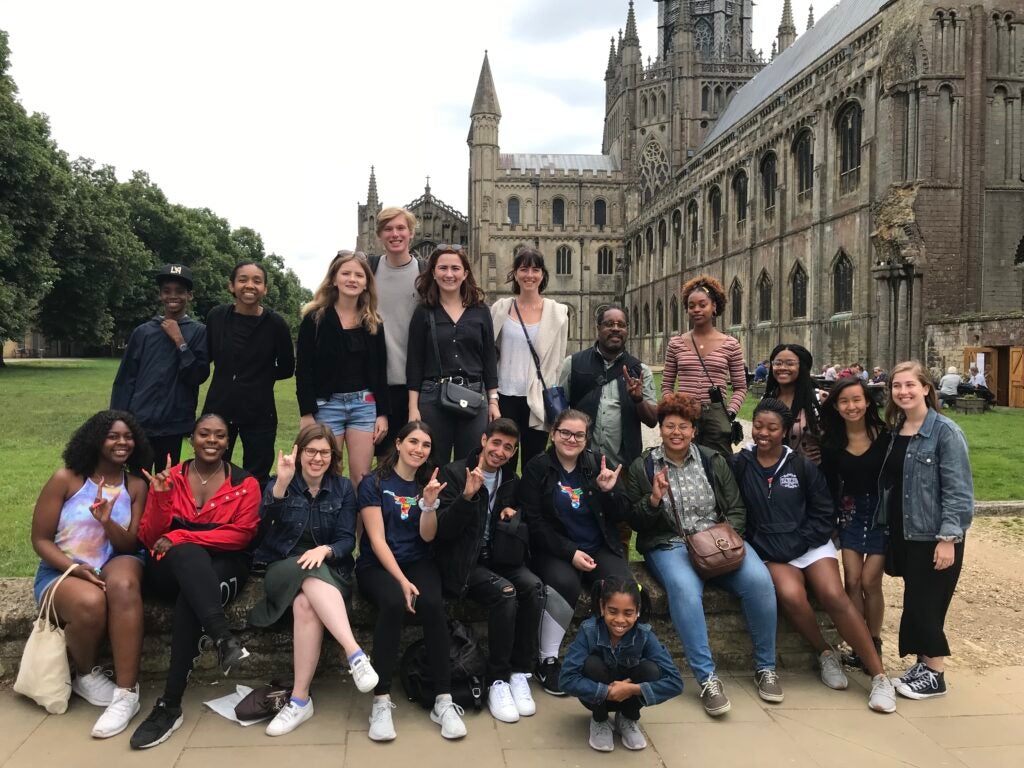
The program allows students to witness students’ experiences in UK colleges, K-12 schools and higher education systems, and compare these to their own experiences in the U.S.
It is framed as a comparative class, but any student who has gone to school, not just education students, can draw that comparison,
Reddick said. It is great to see our COE students share their expertise from the point of view of having been immersed in the field of education.
According to Childs, it is also a good entryway for students interested in international travel as several have shared that this class was their first time traveling abroad. The goal is to expose students to understand the different systems of education, as well as to a different lifestyle. Additionally, he said it allows students the opportunity to navigate a different space, make friends and learn to manage classwork and free time while exploring a new country as young adults.
Students can learn more about the course, Exploring UK Education, through Texas Global.