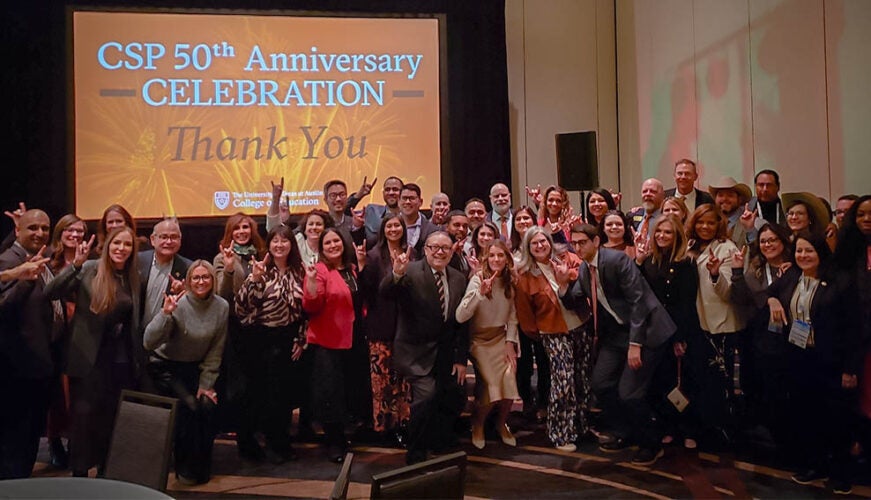
Housed in the College of Education, the top-ranked Cooperative Superintendency Program (CSP) is like no other program in the country. Since 1976, aspiring superintendents already leading within the state’s schools and districts have chosen to come here to elevate their leadership in service to public school districts across Texas. This year, we proudly celebrate 50 years of lasting impact, marked by our graduates who have strengthened schools and supported families and communities.
Before CSP was established, there was an urgent need in Texas to prepare visionary leaders to serve the public school system in key leadership roles. The program was created to answer that call, rooted in a deep commitment to public service, a rigorous curriculum and the resources needed to develop resilient leaders.
It All Starts with Leadership
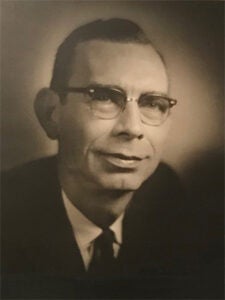
CSP’s rich history speaks to the caliber of the program today. Its enduring legacy began with its leadership, starting with founder and director Lawrence Haskew, or L.D.
as he was familiarly known. Haskew’s legendary influence lives on through the program’s alumni, from its earliest members to its newest graduates.
Rubén Olivárez, director of the Cooperative Superintendency Program from 2006 to 2021, first met Haskew in 1973 as a student at UT working in the teacher corps program.
We presented a petition for a professor who could help us understand how the educational system works, where the power is, and how we can participate in a change-oriented type of program,
Olivárez said. Dr. Haskew stepped up to the plate.
CSP alumna Susan Sclafani (Ph.D. ’87), who served as Assistant Secretary for Vocational and Adult Education at the U.S. Department of Education during the George H.W. Bush administration, expressed deep admiration for Haskew.
L.D. Haskew’s vision of every district in the state being run by a graduate of the Cooperative Superintendency Program was not for his ego,
Sclafani said. It was because he understood that the student population in this state is so diverse, from the poorest of the poor to the richest of the rich. And he knew that education would be the equalizer.
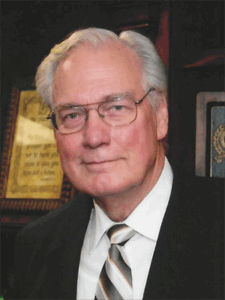
Nolan Estes, the iconic director who succeeded Haskew and served from 1980 to 2006, is also remembered with fondness and admiration by his former students.
Dr. Estes was a world thinker,
she said. He was a global thinker. And that meant that he saw beyond the immediate to the ramifications in an instant.
As a longtime education professor and researcher who directed CSP from 2021-2025, Pedro Reyes has watched the superintendent program evolve through the decades while noting that the original mission has not changed.
Our vision was to place a CSP graduate in every public school in Texas to lead the education of all Texas children,
Reyes said. Our mission was to prepare the most effective education leaders in the state. We continue to do just that.
A Program Like No Other
Students enter the program as accomplished full-time education leaders with master’s degrees and graduate with a doctorate. They emerge as executive leaders, equipped with essential skills in administration, financial management, policy and strategy, and empowered to boldly lead public school systems into the future.
The Cooperative Superintendency Program exists because exemplary leaders have stepped up to create and sustain the program,
said David DeMatthews, current director of the program and professor. The success of countless alumni sets the standard for what it means to lead.
One of the many things that makes CSP so unique is that it organizes students into intentionally small cohorts, typically 12 to 15 students. This allows students to receive intensive hands-on field experience and clinical experiences alongside distinguished faculty and researchers. They also work with urban, suburban and rural superintendents to build and refine their leadership and executive skills.
CSP alumnus Tim Miller (Ed.D. ’06) previously served as a superintendent in Cleburne ISD and director at the Texas Education Agency (TEA) before becoming superintendent in residence for the Raise Your Hand Texas Foundation. He believes that one of the reasons the program is so successful is because of how it teaches leaders to engage their communities effectively.
The ripple effect that a strong leader has, within the school district and to the community and to the larger region, is immeasurable,
Miller said. An effective leader is able to engage parents, business leaders, and community members into the work of the school and allow them to help spread the word about all the wonderful things that are happening in K-12 public schools in the state of Texas.
CSP students gain expertise in school district functions, including finance, governance, curricular leadership and operations, in order to develop and implement a vision for the school district in collaboration with principals, teachers and parents.
The program’s innovative curriculum is continuously revised and updated based on faculty research and feedback from alumni and award-winning superintendents. The coursework also addresses the current and persistent challenges experienced in the field, such as teacher shortages, budget cuts and shifting school board dynamics.
The superintendent is the leader, and leadership is the key to success in anything,
said Tom Anderson (Ph.D. ’77), who was part of the first CSP cohort. He worked in leadership roles at TEA for over 20 years and as superintendent in San Marcos ISD. The program has developed numerous outstanding leaders. When you follow their careers, you see that they have made a significant difference in the whole education process and ultimately, students profit.
Join Us
Support the Cooperative Superintendency Program Legacy of Leadership Endowed Excellence Fund to help recruit the best and brightest to the Forty Acres and provide the hands-on learning that is a cornerstone of the program.
Preserving its Legacy
Today, newly enrolled students step into a legacy of leadership and public service, entrusted with advancing high-quality education across school districts and communities of all sizes. Guided by the steadfast belief in educational opportunity and equal access to those opportunities, they carry forward a mission that continues to shape public education.
The work of superintendents and principals might be overlooked by media or the public, but that does not make the job any less impactful, engaging and transformational,
DeMatthews said.
Since its first graduating class in 1977, more than 500 alumni are serving or have served in leadership roles in public education around the state and across the country – a true testament to the program’s strong foundation and enduring values, as leaders and advocates for public school children.
For five decades, CSP has cultivated exceptional educational leadership – both past and present – and will continue to do so for generations to come.
Moving forward, we want to ensure that the Cooperative Superintendency Program is affordable and continues to attract the best applicants and that the alumni network grows stronger to sustain the next 50 years and beyond,
DeMatthews said.
Linda Mora (Ph.D. ’05) devoted her 48-year career to education. She named the College of Education as part of her legacy and encourages other CSP alumni to do the same. It’s more incumbent on the Cooperative Superintendency Program to continue the path that it was on for 50 years and to continue for the next 50 years, because it’s not going to get any easier to be a school leader,
Mora said.
She emphasized that support for the program is critical as it impacts students across the state. That’s what education is about,
she said. It’s about giving our best to every student who crosses our door.
In honor of our distinguished alumni and their inspirational leadership, the Cooperative Superintendency Program is establishing an endowment to support a student support fund, ensuring the continued strength and future of this remarkable program and the future leaders.
Sclafani, who established the first endowment for the program, hopes that other alumni will follow in her footsteps.
Investing in the Cooperative Superintendency Program is an investment in the state of Texas,
she said. But it’s also an investment in a better world.