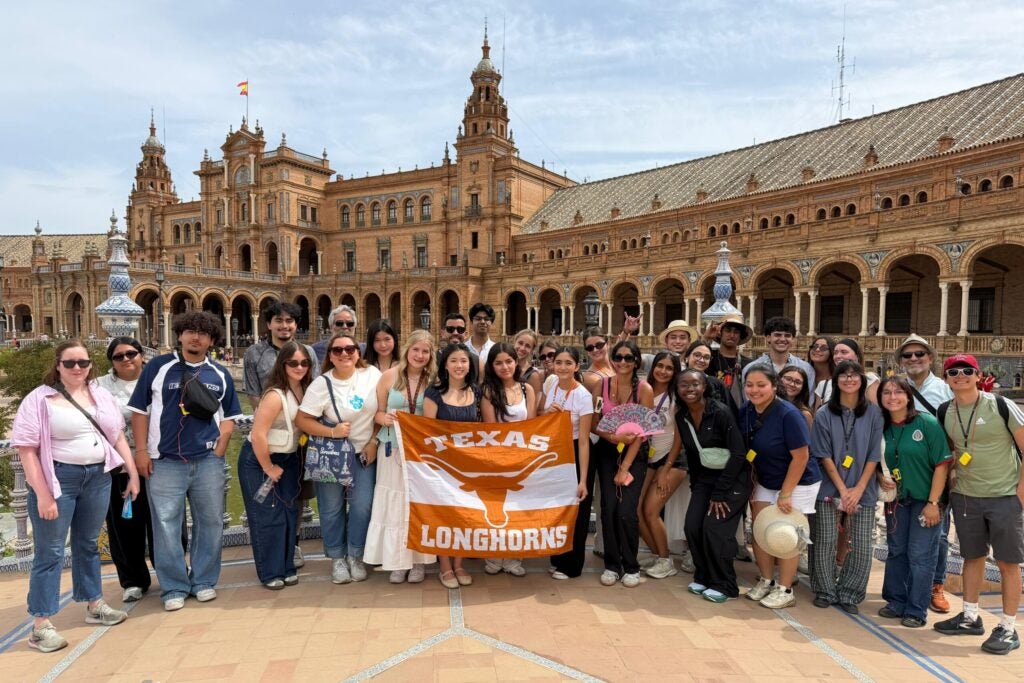
From the ancient ruins of Greece to the vibrant regions of Spain, College of Education students extended their learning far beyond the Forty Acres this spring.
Through The University of Texas at Austin’s Maymester study abroad programs, students immersed themselves in different cultures while studying alongside faculty. Kinesiology and Health Education students traveled to Greece, while Educational Leadership and Policy students explored Spain, gaining global perspectives that enhanced their academic journeys.
The Lasting Influence of Ancient Greece
Hirofumi Tanaka, professor in the Department of Kinesiology and Health Education, led 25 students through Athens and Olympia to deepen their knowledge of the ancient cities’ connections to modern sport, exercise and fitness. Throughout the Exercise and Sport for Health, Fitness and Performance program, students gained insight into how cultural perspectives, physical activity and athletics influence overall lifestyle.
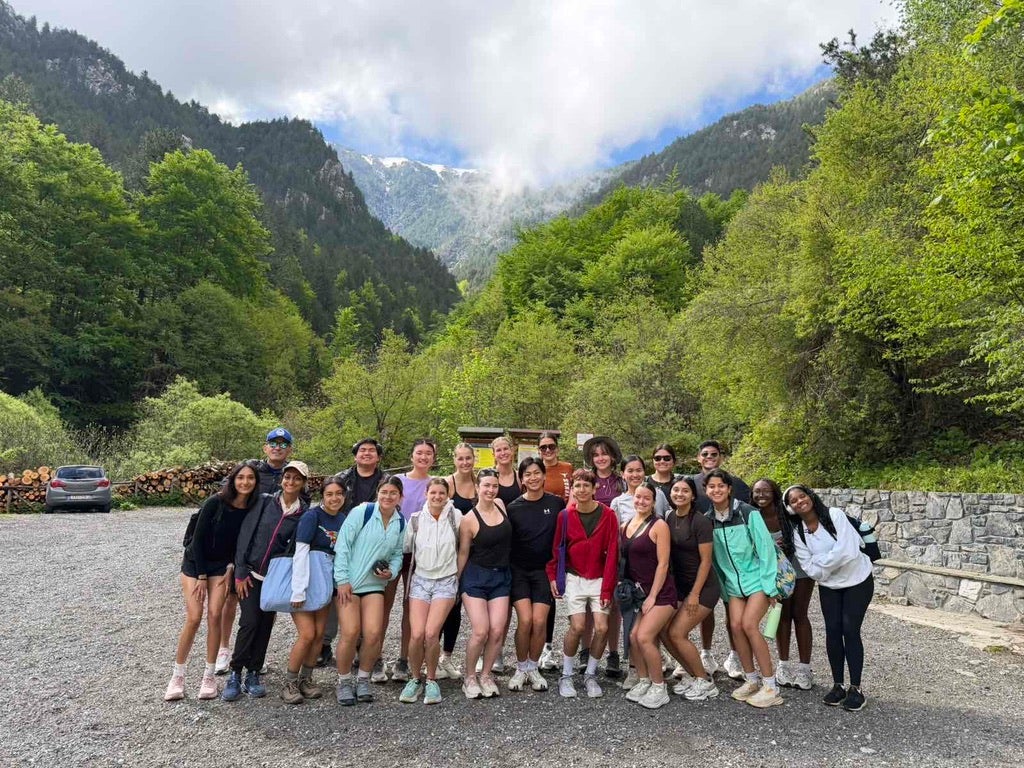
Greece’s distinctive history and culture continue to shape the modern landscape of athletics and spectator sports. Throughout the program, Tanaka emphasized the importance of developing global awareness to understand how exercise and sport are experienced in different societies around the world. Students studied diverse approaches to athletic training, nutrition and mental preparation, while activities such as a challenging hike up Mount Olympus offered firsthand insight into Greece’s physical culture.
In ancient Greece, physical fitness was highly valued not only for athletic competition but also for maintaining health and developing a balanced mind and body,
Tanaka says. Today’s public health recommendations continue to support this idea. Regular physical activity is known to improve cardiovascular health, strengthen muscles and bones, promote mental well-being, reduce the risk of chronic diseases and enhance quality of life,
he says. These messages all came from Greece.
At the International Olympic Academy, a global center for Olympics education, students learned about the Games while exploring the historical roots of sport and fitness. Through their research, they examined the numerous health benefits associated with the traditional Mediterranean lifestyle, which supports long-term vitality and longevity through plant-forward diets, social connections and more.
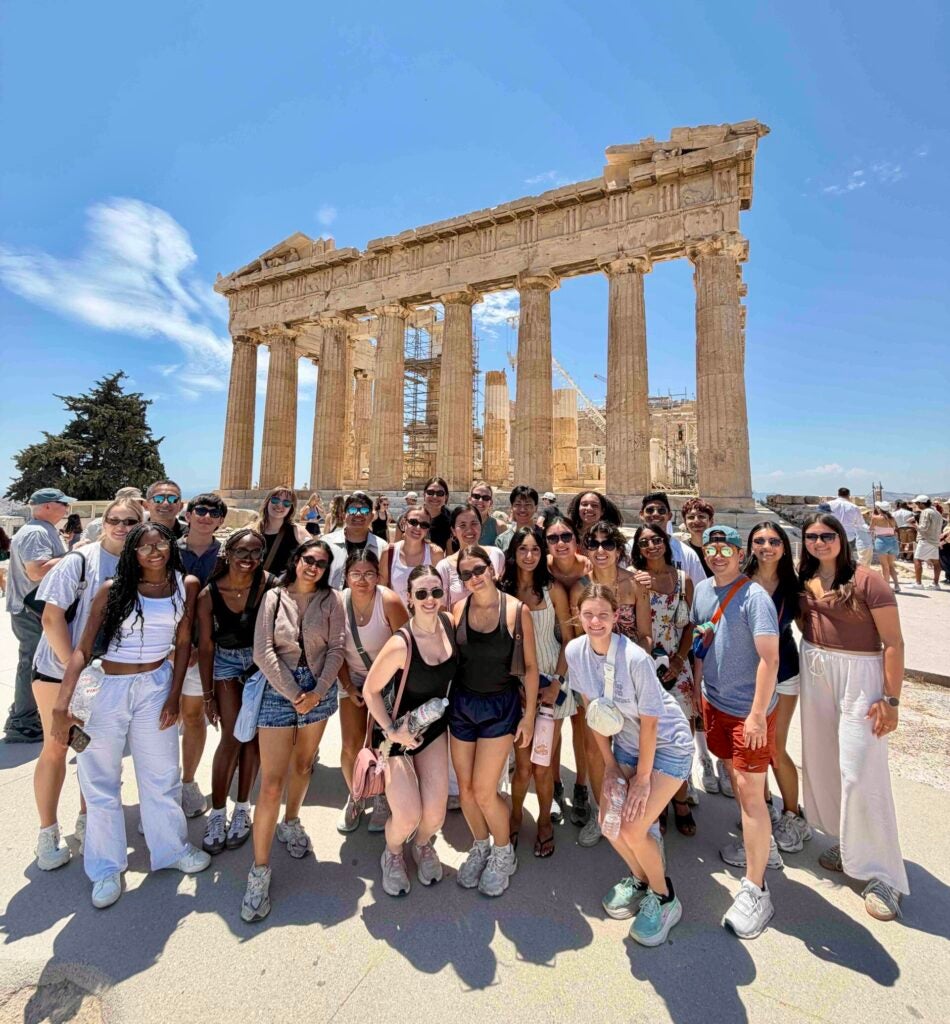
Valerie Tang, an Exercise Science major graduating in spring 2027, says that visits to landmarks such as the Olympic Stadium in Olympia, the Panathenaic Stadium in Athens, and the National Archeological Museum in Athens helped bridge the gap between lectures and real-world experience.
Studying in Greece broadened Tang’s perspective. The country’s slower pace of life compared with other industrialized countries and its emphasis on social connection demonstrated how lifestyle can profoundly influence health and well-being. In fact, life expectancy in Greece is among the highest in the world. At the same time, she observed that local challenges such as high rates of smoking and low levels of structured exercise underscored the universal importance of preventive and rehabilitative care.
Despite language barriers, Tang was able to connect with the Greek people. Sport became our shared language—just one example of how it facilitates human connection,
Tang says. The program included assessment tools designed to improve adherence to exercise.
Seeing them applied within the context of another culture reinforced how universal the science of human movement is,
Tang says.
Claire DeLane, an Applied Movement Science senior graduating in December, says the visit to Greece reaffirmed her goal to pursue a career in physical therapy. As part of DeLane’s research, she analyzed the positive relationship between the traditional Mediterranean diet, physical activity and cardiovascular health.
Comparing the different lifestyles for mainland cities like Thessaloniki and Athens to the islands and smaller towns was extremely eye opening,
DeLane says. Sports—even daily activity performance—are truly shaped by how we train and fuel our bodies. Coming to Greece helped me become a true advocate for physical therapy.
Latino Identities and Cultural Immersions
In collaboration with UT Austin’s School of Undergraduate Studies, Victor Sáenz, professor in the Department of Educational Leadership and Policy, Rodrigo Aguayo, assistant professor, and doctoral student Juan Gonzalez led 29 UT students—including four College of Education undergraduates—on an exploration of Spain’s rich history, culture and contemporary social issues. Through the Latinx Identities Across España program, students examined topics including identity, migration, language, religion and citizenship through both American and European perspectives.
While based in Barcelona, students traveled to historic landmarks, museums, religious sites and cultural institutions in Madrid, Toledo, Sevilla and Córdoba, highlighting the complex intersections that continue to shape Spain. They also developed a clearer understanding of perceptions of masculinity in the U.S. and Spain.
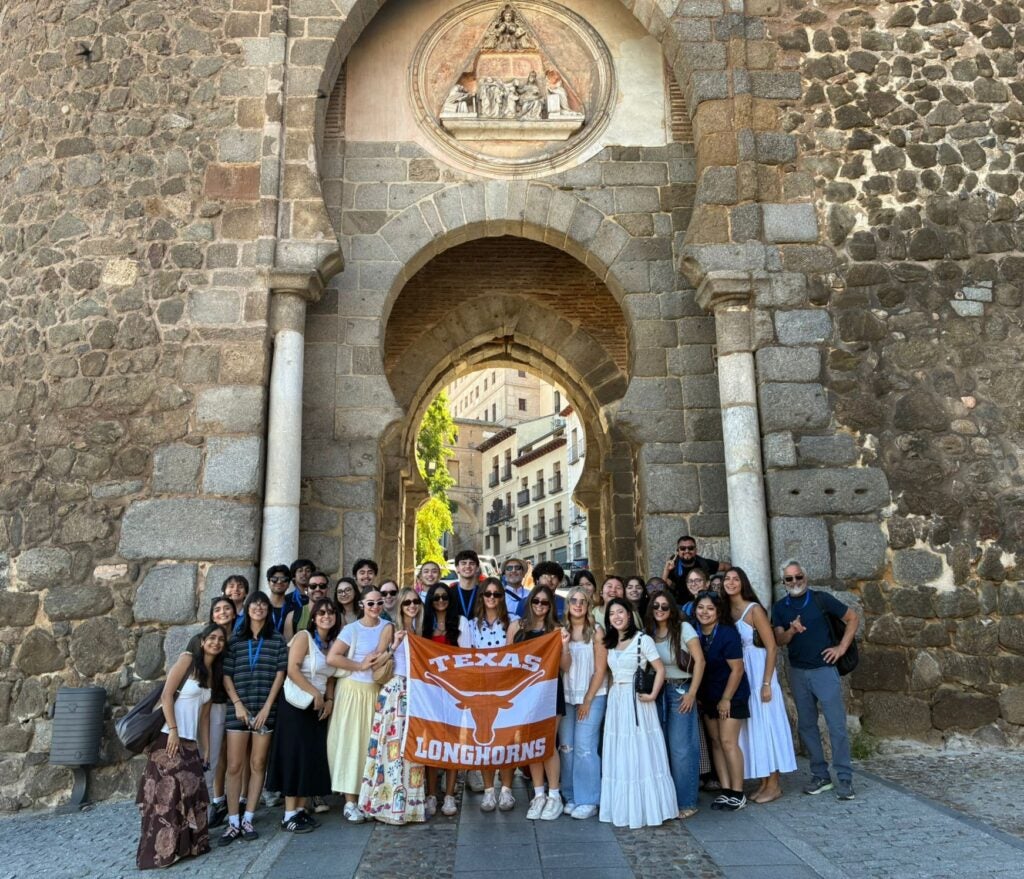
By combining academic inquiry with cultural immersion—including sessions with guest lecturer Emmet Campos, adjunct faculty member in the College of Liberal Arts—students connected classroom concepts to broader global and societal issues. As they explored the role of culture and social context in shaping individual and collective identities, they also developed greater intercultural awareness.
As a faculty member, I greatly value these kinds of experiential learning opportunities for our students,
Sáenz says. It’s incredibly rewarding to see students grow and expand their horizons while challenging their notions of self and others around the world. Spain provides such a unique and historic backdrop given its vast cultural heritage and the profound influence of the Spanish empire across nearly every corner of the world—for good and for bad.
Ava Venturini, a rising sophomore majoring in Kinesiology and Exercise Science, learned that understanding and appreciating a different culture requires more than one single narrative.
The multiple perspectives she gained helped her reflect on the important role of social and cultural systems in shaping experiences,
Venturini says.
Ashley Hernandez, a third-year Youth and Community Studies major graduating in spring 2027, formed meaningful connections with her fellow students, which extended beyond relationships typically formed in a semester-long course.
The program prepared me to navigate my way through cities with diverse makeups and backgrounds,
she says. Traveling in a new country halfway around the world was daunting but I grew so much from doing it on my own. I can’t wait to bring that confidence back to UT.