Higher Education Leadership and Policy
Department of Educational Leadership and Policy
Designed For
This program is designed for students interested in the scholarly study of higher education, its students, institutions and role in society. It serves those seeking advanced preparation for research and leadership roles across academic and professional settings and emphasizes producing original scholarship that informs leadership, policy and practice in higher education.
Career Objective
Graduates are prepared to become researchers, educators, and leaders in higher education, government, nonprofit organizations and the private sector. The program emphasizes developing the skills and knowledge needed to contribute to evidence‑based decision‑making and institutional leadership.
Prospective Student Information Sessions
At a Glance
Program Starts: Fall
Deadline to Apply:
December 1
Length of Program: 48-60 months
Program Location: On campus
GRE Required? No
Leading Change in Higher Education
The Program in Higher Education Leadership and Policy (PHELP) is devoted to the scholarly study of higher education, its students and institutions, and its place in society. Our faculty and students are in the vanguard of understanding and shaping the dynamic environment of higher education now and in the future.
Higher education is being reconceived and reorganized through:
- Increased access and challenges in retention and competition for diverse student communities.
- Intensified accountability and governmental oversight.
- The need for lifelong avenues of learning and re-training.
- The opportunities presented by digital innovations both in and out of the classroom.
Students receive a thorough grounding in the functioning of postsecondary institutions and in the skills of administration, decision-making and leadership. They develop an understanding of the particular role of postsecondary institutions in society as both distributors and creators of knowledge, the historical context from which those institutions have emerged and the ethical considerations that must surround and guide the enterprise.
Above all, the program prepares doctoral students to be consumers and producers of postsecondary research and scholarship who will add to the core of knowledge that is the basis for informed practice.

Program Co-coordinator
Denisa Gándara
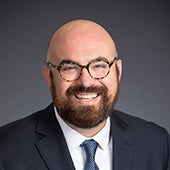
Program Co-coordinator
Michael Anthony Goodman

Graduate Admissions Coordinator
Jacinda Gonzales
Program Details
Application Process
All applicants must apply via the Graduate Program Application for Admission. We strongly encourage you to start this process well in advance of the deadline. Detailed instructions are available on our How to Apply page.
The GRE is not required for admission to the PHELP program. Any submitted GRE scores will not be reviewed or considered by the admissions committee.
Requirements
A master’s degree from an accredited U.S. institution, or proof of equivalent training at a foreign institution in education, the social sciences, or related field.
A statement of purpose that addresses the following:
- Your interest in pursuing a doctoral degree in the Program in Higher Education Leadership and Policy (PHELP) at UT Austin.
- The life experiences that have shaped your decision to apply.
- Personal experiences, achievements or accomplishments that demonstrate your potential contributions to the University’s mission.
- Your proposed research interests and the faculty member(s) you hope to work with.
- Your career goals following completion of your Ph.D.
A 4–6 page writing sample (e.g., a master’s thesis excerpt, published article, or conference paper). After submitting your application, you will receive an acknowledgment email from the Graduate School that includes your UT EID. Please upload your writing sample to the Miscellaneous Admissions Document section at that time.
Three letters of recommendation submitted through the Graduate School application system.
A resume or curriculum vitae.
Questions? Contact the ELP Graduate Coordinator.
Program Requirements
Departmental Core (12 credit hours) – all four are required
- ELP 390G Economics of Education (ELP 390E Econ & Finance)
- ELP 390P Educational Politics & Policy
- ELP 390S Social & Cultural Contexts of Education
- ELP 290R Organizational Design & Behavior
Specialization Courses: (18 credit hours)
- ELP 395S Systems of Higher Education
- ELP 390C Pro-Seminar: Research in Higher Education
- ELP 395C Adv. Issues in Higher Education (Capstone)
- Choose at least ONE:
- ELP 395L Higher Education Law
- ELP 395H History of Higher Education
- PHEL Elective Course #1
- PHEL Elective Course #2
Research and Inquiry (methods): (12 credit hours)
- ELP 391E Epistemologies Systems of Human Inquiry
- ELP 391P Quantitative Research Design & Analysis
- ELP 391Q Qualitative Research Design
- Advanced Course in Research Methodology OR a course in Program Evaluation
Cognate Courses outside the College of Education
15 credit hours, 9 of these should be of the same cognate theme.
Research Apprenticeship (3-6 hours)
- ELP 393R Research Apprenticeship (directed studies)
Dissertation
- ELP 399R (can be taken for 3, 6, or 9 hours per semester)
- ELP 399W (can be taken for 3, 6, or 9 hours per semester)
After successfully completing at least 30 semester credit hours of required and elective coursework, students will prepare for advancement to candidacy.
Learn more about doctoral program milestones on the department’s wiki.
Core Faculty

Higher education policy, politics, and finance with a focus on serving historically underserved groups
Accepting new students

Expertise on the intersection of law and educational policies and practices focused on access and equity in higher education, including affirmative action, freedom of expression and inclusion, and the use and influence of research in law.
Accepting new students

Focuses on student governance and involvement in the areas of college student government, the student body presidency, sorority/fraternity life, equity and justice issues, queer students and issues in higher education, and educational crises and emer...
Accepting new students

Bringing the experience of 28 years as dean of the College of Education, Justiz shares his expertise in topics of public policy, the politics of education, and Latin American programs in education.

Interests include academic administration, faculty in higher education, and college student development with research on college teaching and minorities in higher education.

Research typically examines the impact of state policies, community college interventions, and online education on the opportunities and outcomes of college students.
Accepting new students

Examines the experiences of faculty of color at predominantly White institutions; mentoring relationships between faculty and Black students; and work-life balance in academia.

Leads the Project MALES (Mentoring to Achieve Latino Educational Success Initiative focused on Latino males in education; seeks to advance research-informed policy solutions that enhance educational outcomes for students in secondary and post-seconda...
Accepting new students

Studies education policy and social stratification related to college entrance and completion in the United States; focuses on college pathways at broad-access institutions, including community colleges.
Accepting new students

Intersectional identities and experiences of Black women (students, staff, and faculty) in higher education; bell hooksian theory and Black feminism; student affairs programming; critical qualitative methodologies; student success and studying abroad...
Accepting new students
Affiliated Faculty

Manages and coordinates multiple research and evaluation grants and contracts for the Educational Research Center.

Focuses research on student success and graduation initiatives, including innovative college readiness assignments, student success programs and understanding the completion agenda.

Former Associate Vice President for the Longhorn Center for Academic Excellence


Oversees the Center's community college relations and serves as a point of contact for state leaders, funders and national higher education organizations.

Focuses on policies, practices, and interventions that promote social mobility and reduce socioeconomic stratification in K12 and higher education.

Teaches courses that examine the intersectionality of culture, organizations, and systems of privilege, power, and difference in higher education.


Assistant Dean for Student Affairs, College of Pharmacy

AI Pedagogy, instructional design, academic technology, technology-enhanced learning, learning technologies, online education, college teaching and learning, course evaluations, design thinking, design pedagogy, learning experience design, and develo...

Focuses on university-wide campus climate initiatives such as developing inclusive classrooms, campus climate issues and support, and recruitment/retention of faculty of color at predominantly white institutions.