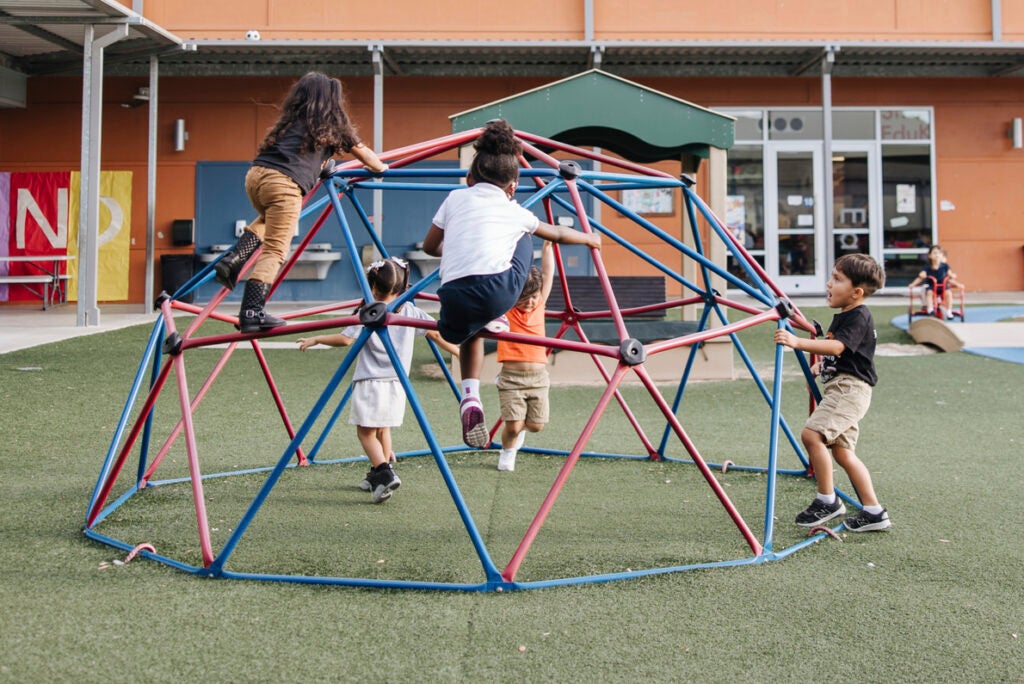
A recent research study led by Deborah Salvo, principal investigator, and Esbelle Jowers, co-principal investigator, of the Department of Kinesiology and Health Education (KHE) and the Center for Research to Community Impact (CRCI), explored a deceptively simple question: What makes a public playground playable?
While most parents and caregivers focus on the swings, slides and climbing walls, the study found that the surface underneath the child’s feet can significantly impact how they play and interact. Surface materials—including artificial grass, engineered wood fiber or wood chips, poured-in-place rubber and multi-surface—affect not only a child’s activity level, physical development and social play but also how caregivers perceive the environment’s safety, cleanliness and inclusivity.
This study exemplifies the team science model and capacity-building models we have at CRCI, with two CRCI directors co-leading and pooling resources for the work to happen, while introducing so many undergraduate interns to community-centered research,
Jowers says.

The research team examined 421 playgrounds, including six neighborhood playgrounds in Central Texas. Half were located in higher-income areas and half in lower-income communities, with all sites situated within approximately a five-minute walking distance of nearby residences. The researchers found that poured-in-place rubber surfaces and multi-surfaces (such as rubber plus turf) were commonly associated with neighborhoods with higher median household income.
The study’s findings have been presented at leading scientific conferences and will be showcased at the 2026 Congress of the International Society of Physical Activity and Health.
Salvo said one of the study’s most important contributions was developing an evidence-informed definition of playground playability. Based on the findings, the team defined playability as the degree to which a playground supports active, social, engaging and inclusive play for all children.
We are the first to formally define this construct, drawing on robust data from a rapid scoping review of playground research studies from around the world and multidisciplinary key informant interviews with sports management researchers, child development experts, parks and recreation officials, playground designers and teachers,
Salvo says.
Ten undergraduate and graduate students played active roles on the research team, including Case Garza, doctoral student in KHE’s Prevention Science program and graduate research assistant at CRCI, who served as field coordinator for this study.
It was exciting to see my master’s thesis assessing playground access equity in Austin—where I first pilot-tested a playground use measurement tool that eventually led to the SOPLAGROUND scanning tool—serve as the launching point for this larger study,
Garza says. It allowed me to help mentor our undergraduate data collection team, whose enthusiasm and hard work helped make the project a success.
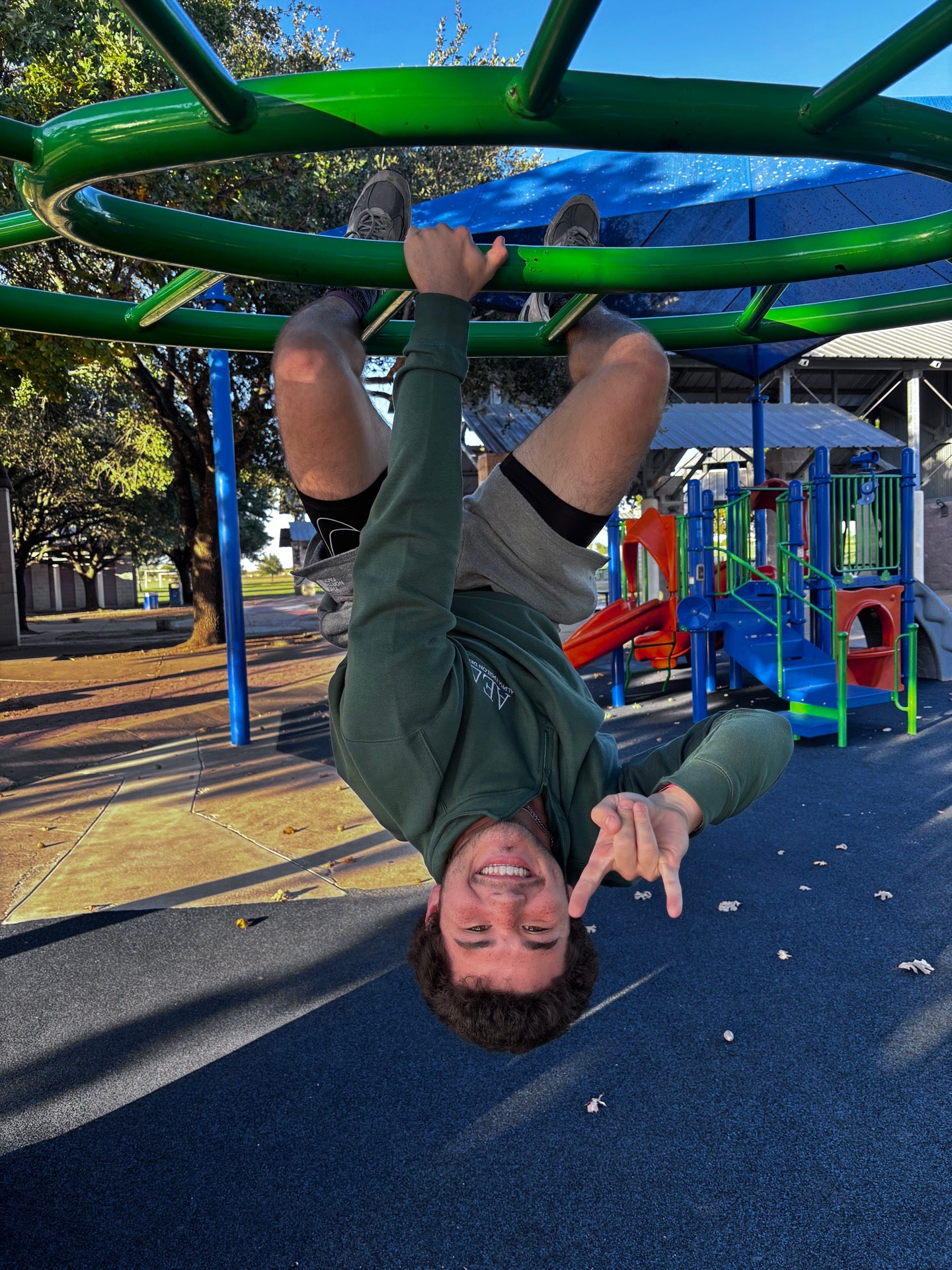
The team used the SOPLAYGROUND observational tool—developed as part of the project and building on prior research by Garza and Salvo—to conduct repeated structured observations and scans documenting playground user characteristics. Through these observations, researchers measured active play by recording the number of children engaged in moderate-to-vigorous physical activity, such as using playground equipment, running and playing tag, compared with sedentary behavior.
Through caregiver questionnaires, the team also found that grass surfaces were consistently preferred because they were perceived as softer, cleaner and more comfortable. These insights helped provide a more comprehensive picture of how playground surfaces influence overall use and experiences.
Grass playground surfaces were consistently associated with greater playability, active movement and increased social interaction, particularly in underserved communities. Researchers also noted that grass offers environmental benefits, while mulch can support sustainability goals and provide a more cost-effective option for playground design. Engineered wood fiber surfaces were associated with lower playability overall, while paved surfaces produced mixed results.
Surface type really shapes the overall experience
, says Bethany Morrison, research associate with CRCI and project manager for the study. Even how welcome a space feels can influence whether kids want to run, sit or play together.

Given the importance of playground design, surfacing remains a costly decision. While rubber and artificial grass appeared to support overall playability more effectively than loose-fill materials, the researchers concluded that equitable access to these types of surfaces warrants further examination. Urban areas tend to have greater access to rubber and grass playground surfaces compared with suburban and lower-income communities.
The study was partially funded by an unrestricted gift by ForeverLawn Inc. to the People, Health, and Place lab directed by Salvo at UT Austin. Moving forward, the research team hopes to expand their research in this space by working more closely with low-income communities and key decision makers to improve playground access equity in Austin and beyond.
Playground photo credit: Cecily Breeding