Educational Policy and Planning
Department of Educational Leadership and Policy
Designed For
Scholars and professionals who seek to examine how education policy shapes learning, particularly for historically marginalized communities. The program is ideal for students interested in studying the historical, cultural, economic, political and social conditions that influence educational systems, with a specific focus on policy development, implementation and analysis in low-income and underserved contexts.
Students are prepared to become education policy scholars and analysts who approach research from a multidisciplinary perspective.
Career Objective
Graduates are prepared for leadership roles across academic, research and policy settings, including:
- Faculty and research positions at universities.
- Research and leadership roles in community-based organizations.
- Government agencies at the local, state and federal levels.
- Civil and human rights organizations.
- Nonprofits and advocacy organizations.
- School districts and education agencies.
- Policy and research consulting firms.
The program equips graduates to conduct high-impact research, influence policy design and implementation, and train the next generation of education leaders and scholars.
At a Glance
Program Starts: Fall
Deadline to Apply:
December 1
Length of Program: 48 months minimum
Program Location: On campus
GRE Required? No
Scholarship for Systemic Change
Our doctoral program prepares future faculty members, policy analysts and researchers through specialized coursework in education politics, policy implementation, organizational theory, social and cultural contexts of education, and economics of education. Students receive rigorous training in multiple research methodologies.
Students develop a strong foundation in educational policy development, implementation and analysis while learning about the legal, sociocultural and sociopolitical foundations of education policy. The curriculum emphasizes advanced qualitative and quantitative research methodologies and trains students to critically consume, synthesize and produce cutting-edge knowledge in the field.
Graduates leave the program with the ability to:
- Understand the complexity of educational systems and the conditions shaping student learning.
- Evaluate the effectiveness of policy proposals and the implementation of existing policies.
- Analyze how education policies affect outcomes for traditionally marginalized students.
- Advocate for equitable policy approaches that enhance learning opportunities.
- Conduct sophisticated, multidisciplinary policy research.
Through its integration of theory, methodology and applied policy analysis, the EPP doctoral program prepares scholars to lead research-driven change across academic, policy and community contexts.
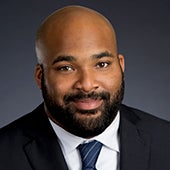
Program Co-coordinator
Joshua Childs

Ph.D. Program Co-coordinator and M.Ed. Coordinator
Sofia Malik

Graduate Admissions Coordinator
Jacinda Herrera
Program Overview
Application Requirements
All graduate students are required to apply through the Graduate School website. We strongly encourage you to start this process well in advance of the deadline to allow us time to process your information.
The GRE is no longer required for those applying for admission to the EPP Ph.D. program. If applicants choose to submit GRE scores, they will not be reviewed or considered by the admissions committee.
Statement of Purpose
Your statement of purpose should describe:
- Why you are interested in a doctoral degree in the Educational Policy and Planning Program (EPP) at UT Austin?
- What is it about our program, specifically, that interests you?
- Your research interests. What compels you to pursue a doctorate? What kinds of research are interested in conducting? Which faculty members would you like to work with? What are your burning questions?
- Any key life experiences that have shaped to your decision to pursue a doctorate in EPP.
- Any personal experiences, achievements or accomplishments that would help you contribute to the program.
- Your career aspirations once you complete your degree.
Writing Sample
Submit a writing sample (e.g., course paper, master’s thesis, published article, paper prepared for a professional conference, etc.) to the “Miscellaneous Admissions Document” section in MyStatus. There is no page requirement, but we typically receive writing samples between five and 30 pages. After you submit your materials, you will receive an acknowledgment email from the Graduate School which will also contain your UT EID.
Resume or Curriculum Vitae
You will be asked to submit a recent resume or curriculum vitae (CV). We recommend that you use this template so that admissions committee members can be sure to see all relevant information.
Learn more on our How to Apply page.
Program Requirements
Minimum Total: 66 credit hours including dissertation
Social Science Core (12 credit hours)
- ELP 390E Educational Economics & Finance Policy
- ELP 390S Social & Cultural Contexts of Education
- ELP 390P Educational Politics & Policy
- ELP 390R Organizational Design & Behavior
Educational Policy Core (21 credit hours)
Policy Requirement
- ELP 394E Policy Research Problems (Capstone)
- ELP 390C Introduction to P-20 Research and Careers (Pro Seminar)
- ELP 384C Policy Analysis
Policy Electives (Choose 2 from the following)
- ELP 384F Foundations of Educational Policy
- ELP 384M Policy Implementation
- ELP 384V Poverty and Educational Policy
Advanced Policy Seminars (Select 2)
- ELP 394K.1Seminar in Latinx Education
- ELP 394K.2 Market Based Reforms in Education
- ELP 394K.3 Place, Opportunity, and Education
- ELP 394K.4 Schools and Gentrification
- ELP 394K.5 Law, Leadership and Discipline Policy
- ELP 394K.6 Language Policy in Education
- ELP 394K.7 Immigration Theory in Education
- ELP 394K Accountability & School Reform
- ELP 394K Race and Ethnic Relations in Schools
- ELP 394K Contemporary Education Policy Issues
Research Core (12 credit hours)
- ELP 391E Epistemologies of Educational Research
- ELP 391P Quantitative Research Design & Analysis
- ELP 391Q Qualitative Research Design
- ELP 392Q Advanced Qualitative Research OR
ELP 392P Advanced Quantitative Research & Analysis OR
_____ Advanced Course in Research Methodology (out of the department, as approved by your faculty advisor)
Outside of the College of Education (15 credit hours)
Doctoral students are required to take courses from other colleges within the university. This may be accomplished within a single discipline or in a multidisciplinary format with program advisors’ approval.
Dissertation (6 credit hours)
- ELP 399R
- ELP 399W
Faculty

Examines collaborative approaches involving community organizations and stakeholders that improve academic achievement and reduce opportunity gaps for students. Also studies chronic absenteeism, the role of high school athletics in school settings, a...

Focuses on school and district leadership, inclusive practices for students with disabilities, and school improvement with an emphasis on improving student achievement and addressing inequities in classrooms, schools, and communities.
Accepting new students

Develops school leaders with the knowledge, skill, and disposition to foster collaborative instructional systems to produce high levels of adult engagement in their unique school environments to assure every student learns well and thrives, with a fo...

Examines principals and school-community engagement/community development and issues of educational equity and opportunity.

Dr. Holme's work explores how structural and systemic factorsparticularly housing policy, and teacher labor marketsshape educational opportunity.
Accepting new students

Examines program evaluation, knowledge mobilizatio, and research use in public school districts. Her work investigates how school leaders navigate socio-political contexts to make evidence-informed decisions, with particular attention to the organiza...

Focuses on identifying factors that hinder or promote the success of children and families from vulnerable and underserved populations.

I study student success for children experiencing poverty. I analyze how school leadership and state policy facilitate student success across the education pipeline.

Gender and Education; Teacher Labor Markets; Neoliberal Education; Mixed-Methods Research; CritQuant; and International Comparative Analysis

Specializes in urban education from a sociological and multicultural perspective, with a focus on minority youth in schools, particularly at the K-12 level.

Examines issues of power and voice in education policy making and implementation processes, with a focus on public school district superintendents and school boards.
Accepting new students

Uses lenses from organizational sociology to study how district leaders, principals, coaches, and teachers implement policy
Additional Information
Let us know what your academic interests are within the College of Education and we’ll be in touch.